Peace, Power and Politics

From END Info 26 DOWNLOAD

nobomb.JPG

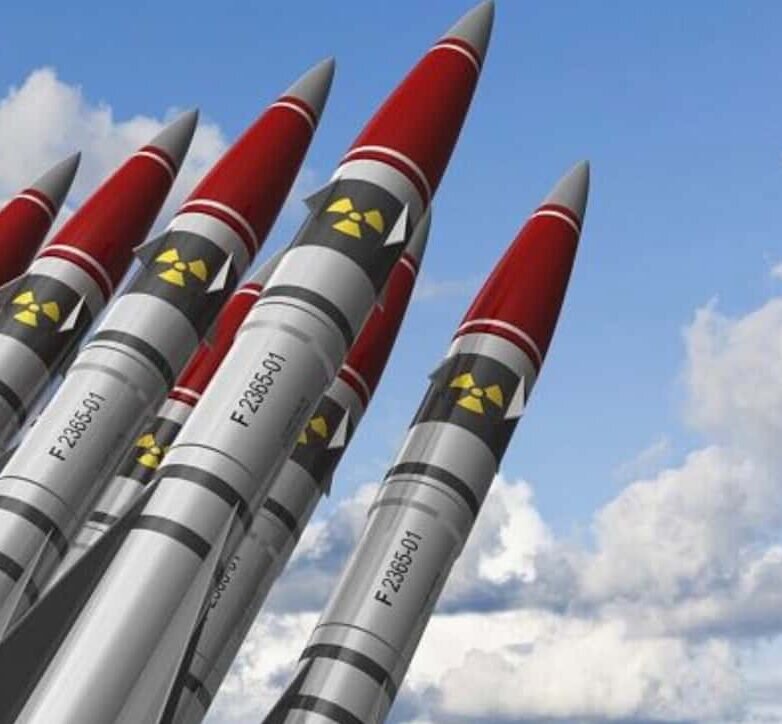
The Australia, New Zealand, United States Security Treaty (ANZUS), signed in 1951, extended Washington’s ‘nuclear umbrella’ to two key states in the Pacific Region. Billed as a ‘collective security’ agreement, ANZUS clearly exposed the centrality of nuclear weapons in the US approach to foreign relations. One New Zealand government website describes the situation as follows:

Nuclear weapons played a major part in the United States’ military arrangements, and the possible use of nuclear weapons or nuclear-powered vessels was implicit in any United States response to an attack on New Zealand.1

Despite long-term objections to nuclear testing in the region, expressed from the 1960s onwards, the ANZUS agreement meant concessions on the part of the New Zealand government with respect to US nuclear weapons, military and naval operations and related issues.

By the early 1980s and following a determined campaign by nuclear disarmers, majority opinion in New Zealand was set firmly against the presence of US nuclear arms and nuclear powered ships in the country. The opposition Labour Party entered the 1984 election with the clear aim of introducing a ‘Nuclear Free New Zealand Bill’, campaigning throughout the election against nuclear weapons and propulsion but not against ANZUS itself.

Labour swept to victory and the new Prime Minister, David Lange, made clear that the electoral promise of a Nuclear Free NZ would be acted upon. The new government faced immediate problems. The US policy of ‘neither confirm nor deny’ with respect to nuclear weapons put a significant question mark over the future of ANZUS, which allowed for the presence of US Navy vessels in New Zealand harbours. How could the country be both nuclear free and tied to US military operations?

Lange’s attempts to renegotiate ANZUS were met with hostility. Writing of the reaction some years later, Lange pointed out that:

Far from developing an irresponsible national policy on the subject, as most of our Western allies found it expedient to insinuate, New Zealand was in fact acting in a rational and calculated way, in the name of the traditional concept of strengthening national security. We were, simply, safer without nuclear weapons in our defence than with them ... [T]he policy as expressed in law stands as a statement of the political will to eliminate nuclear weapons and a rejection of the doctrine of nuclear deterrence.2

Robert Green describes the international reaction to New Zealand’s move towards nuclear free status:

With the US fearing that the ‘Kiwi disease’ might spread to other allies such as Japan, Australia, the Philipines and Denmark, New Zealand was demoted from US ally to ‘friend’; military co-operation under ANZUS was curtailed; the US and UK threatened trade; and New Zealand officials were ostracised from the Western group in the UN. Yet the government held firm, bolstered by massive mobilisation of public support by the peace movement in New Zealand and the US ...3

These moves against New Zealand by the US and allies would be more than your average political leader would be capable of withstanding. It is to David Lange’s enormous credit that he stuck to the policy. It is also to his enormous credit that he respected and acted in tandem with the majority opinion of his own party, the international peace movements and, vitally, the majority of New Zealanders. Politicians who are willing to stand up to the US are an all-too-uncommon species.

In 1985 the US attempted to stage a provocation against Lange’s government, in an attempt to test resolve. The previously cited government website takes up the story:

Following confidential discussions over the selection of an acceptable ship, in late 1984 the United States requested that the ageing guided-missile destroyer USS Buchanan visit New Zealand. The Americans hoped that a perception that it was not nuclear-armed would be enough for it to slip under the political radar, and believed they had Lange’s agreement. But on 4 February 1985 the government said no. ‘Near-uncertainty was not now enough for us,’ Lange later explained. ‘Whatever the truth of its armaments, its arrival in New Zealand would be seen as a surrender by the government.’ In response, Washington severed visible intelligence and military ties with New Zealand and downgraded political and diplomatic exchanges.4

The US Secretary of State at the time quickly confirmed that the security arrangements of ANZUS would no longer be maintained. This was the effective end of the Treaty. By 1987 New Zealand passed the ‘New Zealand Nuclear Free Zone, Disarmament, and Arms Control Act 1987’, legislation that is still in place and legislation accepted as the ‘norm’. The country signed and ratified the Treaty on the Prohibition of Nuclear Weapons and the current prime minister is an important voice for nuclear disarmament.

What are the lessons of New Zealand’s approach to nuclear disarmament for those in Europe who wish to achieve the same? There are surely thousands of lessons and we should aim to absorb, learn and act on them but the following examples seem clear enough:

1. Military and ‘security’ agreements with the United States like ANZUS and NATO have nuclear weapons at their core. The US expects total adherence to the nuclear dogma in exchange for ‘security’ assurances. It is unlikely that Europe will become nuclear free as long as European states adhere to NATO.

2. Independent, courageous and consistent political support is essential. More than that, this support must endure when political power is attained. Positive sentiments should not be taken at face value. Enduring commitment is key.

3. The peace movements play an essential role in sparking, building and sustaining both political and wider public support for nuclear disarmament. Without strong, coordinated peace movements our aim of a nuclear-weapon-free zone in Europe will not arise.

If more European states are to sign up to the TPNW, if the ‘nuclear-sharing’ states are to send the nuclear weapons back to the US and if we are to make progress towards a nuclear-free zone, then the points above will serve us well.

Notes

1. https://nzhistory.govt.nz/politics/nuclear-free-nz

2. Quoted from Green, Robert (2018) Security without Nuclear Deterrence, Spokesman, Nottingham

3. Ibid

4. https://nzhistory.govt.nz/politics/nuclear-free-nz

Europe’s turn

From END Info 26 DOWNLOAD

Angelika Claußen, Germany

cropped-NUKE-FREE-EUROPE-Logo.png

Speech made by Angelika Claußen, IPPNW Chairperson and European Vice-President at Büchel military base, 05.09.2021.

From a peace and security policy perspective, the year 2021 has been particularly marked by two events in particular:

1. The entry into force of the Treaty on the Prohibition of Nuclear Weapons in January 2021 and

2. The defeat of the USA as a world power in Afghanistan.

The entry into force of the Treaty on the Prohibition of Nuclear Weapons is a huge success story for the worldwide peace movement! The peace movement is a real success story. We, global civil society, in alliance with the countries of the global South and courageous, outstanding politicians from countries in Europe, from Austria and from Ireland, have achieved a nuclear ban. We expected resistance from the nuclear weapons states, as the TPNW is diametrically opposed to their interests!

Now it's Europe's turn! Nuclear sharing must end in Europe: in Germany, in Belgium, in the Netherlands and in Italy. We can also achieve this goal together if we are clever in our approach.

The first step is to call NATO's nuclear dogma, the dogma of nuclear deterrence, into question.

And this is where the second major event comes into play: the defeat of the world power USA in Afghanistan. It is now crystal clear that military-based security policy is extremely destructive. The military and the arms race, whether nuclear or non-nuclear, are completely unsuitable as means to meet the humanity’s challenges in times of climate crisis. The military itself is a climate killer.

Instead, we need a civil security and peace policy that implements the important steps towards a socio-ecological transformation in cooperation with other countries. Détente and cooperative security policies require drastic disarmament steps for climate justice.

The European peace movement is therefore putting nuclear disarmament in NATO on the agenda. Why does NATO need to use nuclear weapons at all?

Now is the time for nuclear sharing countries to take concrete steps together. “Nuclear free Europe” is the name of our joint campaign to create a dialogue between the peace movement and politicians on what a roadmap to end nuclear sharing in Europe could look like.

We are in the process of building our network in Western and Eastern Europe including Russia. Many NGOs and some willing politicians from European nuclear weapon states and non-nuclear weapon states are involved; ICAN, IPPNW, the IPB and the trade unions are also members.

Our deadline for ending nuclear sharing is in five years. That is the time that the START treaty between the US and Russia has been extended. Talks have begun between experts from the two states with the aim of reducing military-related nuclear risks. But this is not enough for us.

Let's build the campaign for a nuclear weapons-free Europe together in all of our countries! A campaign for a new policy of détente in Europe that explicitly includes Russia.

Let us jointly expand the cooperative relations that have long since begun in the area of climate policy to the area of security and peace! Let us look to our strengths, to our successes.

A world free of nuclear weapons, stemming the climate crisis including climate justice and our right to life and health - all these goals belong together! That is what we are working for together here in Büchel!

Human chain against nuclear arms in Büchel

From END Info 26 DOWNLOAD

Ludo De Brabander, Belgium

anmeldung-menschenkette-gegen-atomwaffen-am-5921-in-buechel-4143.png

On Sunday 5 September, the European month of action against nuclear weapons in Europe kicked off in Büchel, Germany. 800 peace activists formed a human chain to protest against the US nuclear bombs stationed at the Fliegerhorst air base as part of NATO's nuclear sharing arrangements.

The action took place just weeks before the September 26 federal elections to call on Germany to join the UN nuclear weapons ban (TPNW), which has been in force since January 22, 2021. The peace movement has been campaigning against nuclear arms at the air base for 25 years. The human chain was organized by the campaign “Büchel is everywhere! Nuclear Weapon Free Now".

“The deadlock in nuclear disarmament must finally be broken. The incoming federal government can no longer ignore the nuclear weapons ban that came into effect in January and must finally join the treaty! The current government's arguments against this historic treaty are poor. That does not alter the fact that billions are being invested in nuclear armament," said Marion Küpker, spokeswoman for the campaign. "Despite railway strikes and the deteriorating corona situation, we were able to send out a strong message with 800 participants," Küpker continues.

At around 1 p.m., a mile-long human chain was formed. To respect corona distances, the protesters used peace ribbons and banners. The participants also included activists from other European countries. Several speeches were held afterwards. To emphasize the European dimension, there were also speakers from Belgium, the Netherlands and Italy.

“The European peace movement is working together to end NATO’s nuclear sharing. There is a need for a policy of détente, which means the extension of international cooperation on climate to security and peace,” said Angelika Claußen, President of IPPNW Europe and Co-President of IPPNW Germany. Her organization, the International Physicians for the Prevention of Nuclear War (IPPNW), won the Nobel Peace Prize in 1985 for its efforts to highlight the medical and environmental consequences of nuclear war.

Büchel Air Base is the last remaining US nuclear weapons site in Germany (Pershing II and Cruise Missiles were also deployed in Germany in the 1980s). As in Belgium, the Netherlands, Italy and Turkey, the current nuclear bombs will soon be replaced by B61-12 nuclear bombs with a variable explosive power and a greater precision due to the digital guidance system. Germany has committed itself to expanding and modernizing the airbase, an investment for which EUR 256 million has been earmarked. In addition, it is also planned that new jets will be purchased to transport these nuclear bombs, which will cost billions. The German peace movement speaks of a 'ridiculous expenditure'. Representative opinion polls show that a large majority of the population wants the withdrawal of nuclear weapons (see page 13).

In the coming weeks, actions are also planned in Volkel (Netherlands, on September 25), Great Britain (in a dozen places on September 26) and in Italy. In Belgium, the Belgian Coalition against Nuclear Weapons calls on you to participate in the 'Bikes not Bombs' cycling tour on Sunday 26 September. That day has been declared by the UN as the International Day for the Elimination of Nuclear Weapons.

Published at https://vrede.be/

Den Nuklearismus herausfordern: Das Atomwaffenverbot

Richard Falk

(Übersetzt von Joachim Wernicke, Berlin)

First published in English in The Spokesman 148: Challenging Nuclearism edited by Tony Simpson and Tom Unterrainer. See link for more information.

27-279907_nuke-mushroom-cloud-png-transparent-png.jpg

Am 7. Juli 2017 stimmten 122 UN-Länder dafür, den Text eines vorgeschlagenen internatio-nalen Vertrags mit dem Titel „Entwurf eines Vertrags über das Verbot von Atomnwaffen“ (Treaty on the Prohibition of Nuclear Weapons, TPNW) zu genehmigen. Der Vertrag konnte ab September offiziell unterzeichnet werden, wird jedoch erst zu einem verbindlichen Rechtsinstrument, und zwar gemäß seinen eigenen Bestimmungen am 21. Januar 2021, 90 Tage, nachdem das 50. Land beim UN-Generalsekretär seine Bestätigung hinterlegt hat, dass es den Vertrag gemäß seinen verfassungsrechtlichen Anforderungen ratifiziert hat.


Dies ist eine große Errungenschaft, nicht zuletzt, weil sich alle kleineren Atomwaffenstaaten weigerten, am Verhandlungsprozess teilzunehmen, und die Vereinigten Staaten, Frankreich und das Vereinigte Königreich eine formelle Erklärung abgaben, in der sie den Vertrag anprangerten und sich weigerten, bei der Durchführung ihrer Außenpolitik ihre Abhängigkeit von Atomwaffen abzuändern.


In einem wichtigen Sinne ist es unglaublich, dass es nach den Angriffen auf Hiroshima und Nagasaki 76 Jahre gedauert hat, bis dieses bedingungslose Verbot jeglicher Verwendung von oder Drohung mit Atomwaffen erlassen wurde [Artikel 1 Buchstabe e], im Rahmen eines multilateralen Vertrags, der unter der Schirmherrschaft der Vereinten Nationen ausgehandelt wurde. Die Kernverpflichtung von Staaten, die sich dafür entscheiden, Vertragspartei zu werden, ist sehr weitreichend. Der Vertrag verbietet jegliche Verbindung mit Atomwaffen, sei es durch Besitz, Einsatz, Prüfung, Weitergabe, Lagerung oder Herstellung [Artikel 1 Buchstabe a].


Der TPNW ist über das reine Verbot hinaus von Bedeutung. Er kann und sollte interpretiert werden als frontale Ablehnung des geopolitischen Ansatzes zum Nuklearismus und der Behauptung, die Beibehaltung und Entwicklung von Atomwaffen sei eine nachgewiesene Notwendigkeit für die globale Sicherheit, angesichts der Art und Weise, wie die internatio-nale Gesellschaft organisiert ist.


Es ist eine gesunde Entwicklung, dass der TPNW Ungeduld und Misstrauen gegenüber den ausgefeilten geopolitischen Rationalisierungen des nuklearen Status quo zeigt. Sie haben die grundlegenden Einwände vieler Regierungen gegen den Nuklearismus und die anti-nuklearen Ansichten ignoriert, die die öffentliche Meinung der Welt seit langem beherrschen, und sie haben Aktivisten der Zivilgesellschaft animiert. Die alten Zusicherungen der Atom-waffenstaaten, sich zur nuklearen Abrüstung zu verpflichten, sobald ein günstiger Moment eintrifft, verlieren zunehmend an Glaubwürdigkeit, da die Atomwaffenstaaten, mit den Vereinigten Staaten vorneweg, weiterhin enorme Investitionen in die Modernisierung und Weiterentwicklung ihrer Atomarsenale tätigen. Die USA schlagen sogar vor, Atomwaffen im Weltraum zu stationieren, trotz der Risiken und Kosten.


Trotz dieses berechtigten Erfolgserlebnisses muss zugegeben werden, dass es eine fast fatale Schwäche gibt, oder bestenfalls ein klaffendes Loch in diesem neu gegossenen Netz der gesetzlichen Verbote, das durch den TPNW-Prozess geschaffen wurde. Es stimmt, 122 Unterschriften und noch mehr das formelle Inkrafttreten des Vertrags untermauern die Behauptung, dass die internationale Gemeinschaft mit einer so bedeutenden Haltung die Ablehnung von Atomwaffen für alle Zwecke verbindlich signalisiert hat, und dies formalisierte das Verbot gegenteiliger Handlungen. Der enorme Wermutstropfen in diesem Heilmittel ergibt sich aus der Weigerung jeder der neun Atomwaffenstaaten, sich dem TPNW-Prozess auch nur in dem legitimierenden Umfang anzuschließen, an der Verhandlungskonferenz teilzunehmen mit der Möglichkeit, ihre Einwände zu äußern und das Ergebnis zu beeinflussen. Auch die meisten der wichtigsten Verbündeten dieser Staaten, die Teil des globalen Sicherheitsnetzwerks von Staaten sind, die sich direkt und indirekt auf Atomwaffen verlassen, boykottierten den gesamten Prozess. Es ist auch entmutigend anzuerkennen, dass mehrere Länder, die sich in der Vergangenheit mit großer Leidenschaft gegen Atomwaffen eingesetzt hatten, wie Indien, Japan und China, auffällig abwesend waren und ebenfalls das Verbot ablehnten. Diese Haltung der unverstellten Opposition gegen dieses von den Vereinten Nationen geförderte Unternehmen zur Delegitimierung des Nuklearismus, das gleichzeitig die Ansichten einer Minderheit von Regierungen widerspiegelt, muss äußerst ernst genommen werden. Es umfasst alle fünf ständigen Mitglieder des Sicherheits-rats, die über eigene ausgeklügelte Atomwaffenprogramme verfügen, und so wichtige internationale Akteure wie Deutschland und Japan, die seit langem unter dem Atomschirm der USA Zuflucht suchen.


Das NATO-Dreieck aus Frankreich, Großbritannien und den Vereinigten Staaten, drei der fünf Vetomächte im Sicherheitsrat, verärgert über dessen Unfähigkeit, das gesamte TPNW-Projekt zu verhindern, ging 2017 so weit, eine gemeinsame Denunziationserklärung abzugeben, deren Ton ihren trotzigen Anspruch offenbarte, der jeden Zweifel an der dauerhaften Absicht einer nuklearisierten Weltordnung beseitigte: „Wir beabsichtigen nicht, ihn [den TPNW] zu unterzeichnen, zu ratifizieren oder ihm jemals beizutreten. Daher wird sich an den rechtlichen Verpflichtungen unserer Länder in Bezug auf Atomwaffen nichts ändern.“


Der Hauptteil der Erklärung behauptete, dass die globale Sicherheit von der Aufrechter-haltung des nuklearen Status quo abhänge, der durch den Nichtverbreitungsvertrag (NVV) von 1968 gestärkt werde und durch die Behauptung, dass es „die Politik der nuklearen Abschreckung“ gewesen sei, die „wesentlich war für die Aufrechterhaltung des Friedens in Europa und Nordasien über 70 Jahre lang.“ Es ist wichtig, die geografischen Grenzen zu beachten, die mit den behaupteten friedenserhaltenden Vorteilen von Atomwaffen verbunden sind, die die hässliche Realität ignorieren, dass während dieser Zeit verheerende Kriegsführung außerhalb der befürchteten gegenseitigen Zerstörung der Kernländer der geopolitischer Rivalen, einer zentralen gemeinsamen Verdrängung der beiden nuklearen Supermächte während des gesamten Kalten Krieges. Während dieser Jahrzehnte der Rivalität wurden die gewalttätigen Dimensionen der geopolitischen Rivalität effektiv in die nicht-westlichen Regionen der Welt ausgelagert, was für viele gefährdete Völker im gesamten globalen Süden massives Leid und weit verbreitete Verwüstung verursachte. Eine solche Schlussfolgerung legt nahe, dass selbst wenn wir den Anspruch auf Atomwaffen als lobenswert für die Vermeidung eines großen Krieges akzeptieren würden, insbesondere eines nuklearen Dritten Weltkriegs, diese „Errungenschaft“ auf Kosten des Lebens von Millionen, wahrscheinlich zig Millionen Zivilisten in nicht-westlichen Gesellschaften erreicht wurde. Darüber hinaus war die Leistung ein kolossal verantwortungsloses Spiel mit der menschlichen Zukunft, erreicht ebenso durch Glück als auch der Rationalität, die Theorie und Praxis der Abschreckung zugeschrieben werden.


Der TPNW selbst stellt den westfälischen Rahmen des Staatszentrismus nicht selbst in Frage, indem er einen Rahmen globaler Rechtmäßigkeit vorgibt, der unter der Autorität der „internationalen Gemeinschaft“ oder der UNO als maßgeblicher Vertreterin der Völker der Welt erlassen wird. Seine Bestimmungen sind sorgfältig formuliert, indem sie Verpflichtun-gen nur in Bezug auf „Staaten“ auferlegen, d.h. Regierungen, die die vorgeschriebene Ratifikation hinterlegt haben und damit formell dem Vertrag beigetreten sind. Selbst Artikel 4, der hypothetisch darlegt, wie Atomwaffenstaaten sich von allen Verbindungen mit den Waffen trennen sollten, beschränkt seine Ansprüche auf Vertragsstaaten und bietet keinerlei Anleitung im Falle einer vermuteten oder behaupteten Nichteinhaltung. In Artikel 5 wird auf die Verpflichtung zur Sicherstellung der Einhaltung durch die Verfahren der „nationalen Umsetzung“ verwiesen.


Der Vertrag strebt zwar eine schließliche Universalität an, durch den Beitritt aller Staaten im Laufe der Zeit, aber zwischenzeitlich sind die auferlegten Verpflichtungen von minimaler materieller Relevanz über die Übereinstimmung der nichtnuklearen Parteien hinaus, nicht die Stationierung oder andere Verbindungen mit den Waffen zu akzeptieren. Es ist für eine andere Gelegenheit, aber ich glaube, dass nach dem gegenwärtigen Völkergewohnheits-recht, dem neu entstehenden Weltrecht und dem immerwährenden Prinzip des Naturrechts ein starkes Argument vorgebracht werden kann, dass die Verbote im TPNW universell bindend sind, unabhängig davon, ob ein Staat beschließt oder nicht, Vertragspartei zu werden.


Als unnötiger weiterer Schritt zur Bekräftigung des Etatismus und insbesondere der „nationalen Souveränität“ als Grundlage der Weltordnung gibt Artikel 17 den Parteien des TPNW ein Rücktrittsrecht. Alles, was Vertragsstaaten dazu tun müssen, ist die Kündigung mit einer Erklärung über „außergewöhnliche Umstände“, die „die höchsten Interessen ihres Landes gefährdet“ haben. Der Austritt wird zwölf Monate nach Übermittlung der Mitteilung und Erklärung wirksam. Der Vertrag enthält kein Verfahren, mit dem die Behauptung „außergewöhnlicher Umstände“ als unangemessen oder bösgläubig angefochten werden kann. Es ist eine Anerkennung, dass selbst für diese nicht-nuklearen Staaten, die sich an den Vertrag halten, nichts an Recht, Moral oder menschliches Wohlergehen Vorrang hat vor der Ausübung souveräner Rechte.


Artikel 17 wird in absehbarer Zeit wahrscheinlich nicht in Anspruch genommen werden. Diese Bestimmung erinnert uns an die starke Restabneigung selbst von Anti-Atom-Regierungen, globalen und menschlichen Interessen Vorrang vor nationalen Interessen zu geben. Die Rückzugsoption ist auch deshalb wichtig, weil sie bestätigt, dass die nationale Sicherheit weiterhin Vorrang vor dem Völkerrecht hat, sogar in Bezug auf völkermörderische Massenvernichtungswaffen. Als solche sind die von den Parteien des TPNW eingegange-nen Verpflichtungen auf eine Weise umkehrbar, die in den multilateralen Übereinkommen nicht enthalten ist, die Völkermord, Apartheid und Folter verbieten, oder in jus-cogens-Bereichen.


Ist es angesichts dieser Unzulänglichkeiten dennoch vernünftig, dass Atomwaffen-Abolitionisten durch die Vorlage eines solchen Vertrags einen großen Sieg für sich beanspruchen? Bedenkt man, dass die Atomwaffenstaaten und ihre Verbündeten den Prozess allesamt abgelehnt haben und auch diejenigen im Kreis des beabsichtigten gesetzlichen Verbots sich ein Rücktrittsrecht vorbehalten, dürfte der TPNW von Zynikern als reines Wunschdenken und sogar von einigen Engagierten abgetan werden Anti-Atomkraft-Anhänger eher als Anlass für den Schierlingsbecher als für das Glas Champagner.

Die Kluft zwischen den Atomwaffenstaaten und dem Rest der Welt war noch nie so stark, und es gibt keine Anzeichen auf beiden Seiten der Kluft, die geringste Anstrengung zu unternehmen, um eine gemeinsame Basis zu finden, und vielleicht gibt es keine. Ab sofort ist es eine Distanz zwischen zwei Formen der Asymmetrie. Die Atomstaaten genießen ein Übergewicht an Hard Power, während die Anti-Atomstaaten die Oberhand haben, wenn es um Soft Power geht, einschließlich solider Wurzeln in "materieller Demokratie", "Weltrecht", "Naturrecht" und "Globaler Ethik". '.


Die Hard-Power-Lösung für den Nuklearismus war im Wesentlichen reflexiv, das heißt, sie stützte sich auf den Nuklearismus, wie er von den führenden Atomwaffenstaaten geprägt wurde. In der Praxis bedeutete dies eine gewisse Zurückhaltung auf dem Schlachtfeld und in Krisensituationen (es gibt zweifelsohne ein existenzielles Atomtabu, obwohl es niemals ernsthaft erprobt wurde) und vor allem eine delegitimierende einseitige Umsetzung des Regimes des Nichtverbreitungsvertrags [NVV]. Diese Einseitigkeit manifestiert sich in zweierlei Hinsicht:


(1) diskriminierende Verwaltung der zugrunde liegenden Nichtver-breitungsnorm, am vorbehaltlosesten im Fall Israels; ebenso die exzessive Durchsetzung der Nichtverbrei-tungsnorm über die Grenzen des NVV selbst oder der UN-Charta hinaus, wie im Irak (2003), und derzeit durch Androhung von militärischen Angriffen gegen Nordkorea und den Iran. Jede solche Anwendung militärischer Gewalt wäre nicht defensiv und rechtswidrig, sofern sie nicht durch eine Resolution des Sicherheitsrats genehmigt wird, die von allen fünf ständigen Mitgliedern und mindestens vier anderen Staaten unterstützt wird, was glück-licherweise unwahrscheinlich bleibt [UN-Charta, Artikel 27(3)]. Wahrscheinlicher ist der Rückgriff auf einseitigen Zwang, der von den Ländern geführt wird, die die berüchtigte gemeinsame Erklärung zur Abwertung des TPNW abgegeben haben, wie dies für die USA und Großbritannien in Bezug auf den Krieg gegen den Irak der Fall war, prinzipiell rationa-lisiert als Anti-Proliferations-Unternehmen, was sich als ziemlich grober Vorwand für einen Angriffskrieg mit anderen Zielen herausstellte, wobei er  „Schock- und Ehrfurcht“-Taktiken zur Schau stellte.


(2) Das Versagen, die den Atomwaffenstaaten auferlegten Verpflichtungen zu respektieren, nach Treu und Glauben eine Vereinbarung auszuhandeln, diese Waffen mit verifizierten und umsichtigen Mitteln zu beseitigen und darüber hinaus eine allgemeine und vollständige Abrüstung anzustreben. Fast 50 Jahre nach Inkrafttreten des NVV im Jahr 1970 hätte offensichtlich sein müssen, dass Atomwaffenstaaten ihre materiellen Verpflichtungen aus dem Vertrag verletzt haben, was 1996 durch ein Gutachten des Internationalen Gerichtshofs (IGH) bestätigt wurde, die eine einstimmige Aufforderung zur Umsetzung dieser rechtlichen Verpflichtungen gemäß Artikel VI einschlossen. Diese Schlussfolgerung aus Taten und Worten ziehend, ist für alle, die Augen haben um zu sehen, klar, dass sich die Atomwaffenstaaten als eine Gruppe für Abschreckung plus Gegen-Weitererbreitung entschieden haben, als ihr permanentes Sicherheitsregime.


Ein Beitrag des TPNW besteht darin, der Welt das entscheidende Bewusstsein dieser 122 Länder zu vermitteln, das durch die weltweite öffentliche Meinung verstärkt wird, dass der Abschreckungs-/NVV-Ansatz für globalen Frieden und Sicherheit weder umsichtig noch legitim noch ein glaubwürdiger Weg ist, der im Laufe der Zeit zum Ende des Nuklearismus führt.


An seiner Stelle bietet der TPNW einen eigenen zweistufigen Ansatz – erstens eine bedingungslose Stigmatisierung des Einsatzes oder der Androhung von Atomwaffen, gefolgt von einem Verhandlungsprozeß, der die nukleare Abrüstung sucht. Obwohl sich der TPNW über die Entmilitarisierung der Geopolitik und die konventionelle Abrüstung schweigt, wird weithin angenommen, dass spätere Phasen der Denuklearisierung nicht umgesetzt würden, es sei denn, sie beinhalteten eine ehrgeizige Verkleinerung des Kriegssystems. Der TPNW schweigt auch über die Relevanz von Fähigkeiten zur Atomenergie, die mit der Zeit zwangsläufig eine Waffenoption mit sich bringen, angesichts des weit verbreiteten aktuellen technologischen Know-hows. Auch die Relevanz der Kernenergietechnik müsste in einem gewissen Stadium der nuklearen Abrüstung angesprochen werden.


Sollten wir, nachdem wir diese großen Mängel der Vertragsabdeckung und -ausrichtung aufgezeigt haben, diese Einschränkungen beiseite legen und an den Feierlichkeiten und erneuerten Hoffnungen der Aktivisten der Zivilgesellschaft teilhaben, die Welt von Atomwaffen zu befreien? Mein geschätzter Freund und Kollege David Krieger, der sein Leben der Aufrechterhaltung des Brennens der Flamme der Unzufriedenheit über Atomwaffen gewidmet hat und der der langjährige und Gründungspräsident der Nuclear Age Peace Foundation ist, schließt seine fundierte Kritik an den Gemeinsamen Erklärungen der NATO-Führer mit diesem ermutigenden Gedanken:


„Trotz des Widerstands der USA, Großbritanniens und Frankreichs markiert der Atomteststoppvertrag den Anfang vom Ende des Atomzeitalters.“ [Krieger, „U.S., UK and France Denounce the Nuclear Test Ban Treaty“]. Ich bin mir da überhaupt nicht sicher, obwohl Kriegers Aussage die eindringliche Ungewissheit offen lässt, wie lange es dauern könnte, von diesem „Anfang“ zum gewünschten „Ende“ zu gelangen. Ist es, wie einige selbsternannte „nukleare Realisten“ gerne betonen, nicht mehr als ein Endziel, was eine höfliche Codierung für die völlige Ablehnung der nuklearen Abrüstungsoption ist, als „utopisch“ oder „unerreichbar“?


Wir sollten uns bewusst sein, dass es seit 1945 viele frühere „Anfänge vom Ende“ gab, die uns dem Ziel der Beseitigung der Geißel des Nuklearismus vom Angesicht der Erde nicht näher gebracht haben. Es ist eine lange und etwas willkürliche Liste, einschließlich der unmittelbaren entsetzten Reaktionen der Staats- und Regierungschefs der Welt auf die Atombombenangriffe am Ende des Zweiten Weltkriegs, und was diese Angriffe über die Zukunft der Kriegsführung aussagten, die massiven Kampagnen des zivilen Ungehorsams gegen Atomwaffen, dies erregte in einigen Atomwaffenstaaten kurzzeitig die Aufmerksamkeit der Massen; vorgelegte Abrüstungsvorschläge der Vereinigten Staaten und der Sowjetunion in den 1960er Jahren; die Resolution 1653 (XVI) der Generalversammlung der Vereinten Nationen, die 1961 die Drohung oder den Einsatz von Atomwaffen nach der UN-Charta für bedingungslos rechtswidrig erklärte und jeden Täter als eines Verbrechens gegen die Menschlichkeit schuldig ansah; die Kubakrise von 1962, die viele bei der plötzlichen Erkenntnis erschreckte, dass eine Koexistenz mit Atomwaffen nicht tolerierbar war; das mehrheitliche Beratende Gutachten des Internationalen Gerichtshofs von 1996 als Reaktion auf die förmliche Anfrage der Generalversammlung zur Legalität von Atomwaffen, das die Möglichkeit der Legalität des Einsatzes auf den eng begrenzten Umstand der Reaktion auf unmittelbare Bedrohungen des Überlebens eines souveränen Staates beschränkt; die scheinbare Nähe zu historischen Abrüstungsvereinbarungen, die Ronald Reagan und Michail Gorbatschow 1986 bei einem Gipfeltreffen in Reykjavik, Island, vereinbart hatten; die außergewöhnliche Öffnung durch das Ende des Kalten Krieges und den Zusammenbruch der Sowjetunion, die den Weltführern den bestmöglichen „Anfang vom Ende“ bot, und doch geschah nichts; und schließlich die Prager Rede von Barack Obama im Jahr 2009 (die von Jimmy Carter 1977 Gefühle widerspiegeln, ebenfalls zu Beginn seiner Präsidentschaft weniger dramatisch ausgedrückt), in der er mit großem Beifall engagierte Bemühungen befürwortete, die Abschaffung von Atomwaffen wenn nicht zu seinen Lebzeiten, so doch zumindest so schnell wie möglich voranzutreiben; es war ein Anfang, gut genug für einen Friedensnobelpreis, aber dann ein weiteres Scheitern, vermutlich entmutigt durch den Gegendruck des gewaltigen Nuklearwaffen-Establishments.


Jede dieser Gelegenheiten weckte kurz die Hoffnungen der Menschheit auf eine Zukunft, die von der Bedrohung durch einen Atomkrieg und der damit verbundenen Katastrophe befreit war, und doch gab es, wenn überhaupt, nur wenige Anzeichen für einen Fortschritt von jedem dieser Anfänge, die so hoffnungsvoll in Richtung des Zieles begrüßt wurden. Bald überwältigten Desillusionierung, Verleugnung und Ablenkung die Hoffnungen, die durch diese früheren Initiativen geweckt waren, und die Atmosphäre der Hoffnung wurde in jedem Fall ersetzt durch eine Aura atomarer Selbstgefälligkeit, geprägt von Gleichgültigkeit, Ignoranz und Verleugnung. Es ist wichtig anzuerkennen, dass die nationalen bürokratischen und ideologischen Strukturen, die den Nuklearismus unterstützen, äußerst widerstandsfähig sind und sich als geschickt erwiesen haben, die flüchtige Politik periodischer Aufregungen des Anti-Atom-Aktivismus auszusitzen und zu überlisten.


Und nach etlichen Jahren wird nun wieder ein Neuanfang ausgerufen. Wir müssen mehr Energie aufbringen und aufrechterhalten als in der Vergangenheit, wenn wir das Schicksal früherer Neuanfänge in Bezug auf das TPNW vermeiden wollen, das ohne zivilgesellschaft-liche Militanz und Beharrlichkeit in jeder Phase nicht vorangekommen wäre. Die Heraus-forderung besteht jetzt darin, die nächsten Schritte zu erkennen und dann zu gehen und nicht den Präzedenzfällen der Vergangenheit zu folgen, die auf die Feier eines scheinbar vielversprechenden Anfangs folgten, mit einem falschen Vertrauen auf die Mächtigen, die die Situation zu bewältigen und entsprechend zu handeln. In der Vergangenheit wurden die früheren Anfänge bald begraben, akute Bedenken tauchten schließlich wieder auf und ein weiterer Neuanfang wurde mit Fanfaren angekündigt, während die früheren gescheiterten Anfänge aus dem kollektiven Gedächtnis gelöscht wurden.


Hier können wir zumindest der Gemeinsamen Erklärung führender NATO-Verbündeter dafür danken, dass sie ein klares Signal an die Zivilgesellschaft gesendet haben, und den 122 Regierungen, die dem TPNW-Text zugestimmt haben, dass sie es wirklich ernst meinen mit der Beendigung des Nuklearismus, sie müssen den politischen Kampf weiterführen, weiteren Schwung gewinnen und versuchen, Kipp-Punkte zu erreichen, an denen diese Anfänge vom Ende beginnen, genug Zugkraft zu gewinnen, um ein echtes politisches Projekt zu werden, und nicht nur ein weiterer harmloser Tagtraum von gut gemeinten, bald vergessenen leeren Gesten.


Ab sofort ist der TPNW ein Vertragstext, der höflich das Ende des Nuklearismus vorschreibt, aber um diesen Text in ein wirksames Kontrollregime umzuwandeln, werden tiefgreifende Verpflichtungen, Opfer und Beharrlichkeit erforderlich sein, die schließlich das Unmögliche erreichen und an die Bewegungen erinnern, die so tief verwurzelte Übel beendeten wie Sklaverei, Apartheid und Kolonialismus, aber erst nach langen Kämpfen.

Can Nuclear-Free Zones be Enforceable?

From END Info 25 | July/August 2021 | download pdf

51ie93orayL._SX322_BO1,204,203,200_.jpg

The following text is taken from Think Globally, Act Locally: The United Nations and the Peace Movements (Spokesman, 1988).

The Chairman of the Atomic Energy Commission of Argentina alleged in July 1982 that the United Kingdom was in breach of the Treaty for the Prohibition of Nuclear Weapons in Latin America. This Treaty had been agreed in 1967, at Tlatelolco in Mexico, and was the first Treaty to establish a nuclear-free zone in a widely populated area. Previously, areas which had been declared to be free of nuclear weapons had included the Antarctic, Outer Space, and the Seabed. But Latin America was the first populated continent to forbid nuclear weapons anywhere in its region. A recent report by the United Nations summarises the provisions of this agreement:

“The basic obligation of the parties to the Treaty, defined in article 1, is to use exclusively for peaceful purposes the nuclear material and facilities under their jurisdiction, and to prohibit and prevent in their respective territories the very presence of nuclear weapons for any purpose and under any circumstances.

Parties to the Treaty also undertake to refrain from engaging in, encouraging or authorising, directly or indirectly, or in any way participating in the testing, use, manufacture, production, possession or control of any nuclear weapon”.1

The Treaty of Tlatelolco has given rise to an Enforcement Committee, charged with the task of considering any violations or alleged violations.

“OPANAL was set up in June 1969. Its control system includes safeguards to be negotiated with IAEA with respect to all the nuclear activities of the parties”.2

When Argentina appeared before this Committee, it was seconded by Panama.

The status of Argentina in relation to the Treaty is itself a little ambiguous. The Argentines had signed the Treaty in 1967, but they had not actually ratified it subsequently, which would have been necessary if it were to be fully applied. However, the Treaty covers to whole area of Latin America, together with extensive areas in the surrounding oceans. Article 4 defines its scope:

“Article 4. Zone of application

1. The zone of application of this Treaty is the whole of the territories for which the Treaty is in force.

2. Upon fulfilment of the requirements of article 28, paragraph 1, the zone of application of this Treaty shall also be that which is situated in the western hemisphere within the following limits (except the continental part of the territory of the United States of America and its territorial waters): starting at a point located at 35° north latitude. 75° west longitude: from this point directly southward to a point at 30° north latitude. 75° west longitude: from there, directly eastward to a point at 30° north latitude. 50° west longitude: from there, along a loxodromic line to a point at 5° north latitude. 20° west longitude: from there, directly southward to a point at 60° south latitude. 20° west longitude: from there, directly westward to a point at 60° south latitude. 115° west longitude: from there, directly northward to a point at 0 latitude. 115° west longitude: from there, along a loxodromic line to a point at 35° north latitude. 150° west longitude: from there, directly eastward to a point at 35° north latitude. 75° west longitude”.3

Britain had long previously endorsed the Treaty, by signing, in December 1967, the two protocols which were open to nuclear powers outside the region. These were “deposited” with the Government of Mexico two years later, thus activating all the procedures of the Treaty. One of the protocols involved states holding colonial territories in the area, and the other, nuclear states. They were devised in order to permit both colonial and nuclear powers to underwrite the non-nuclear status of the whole continent. But the British Government filed declarations reserving its position on certain matters within the province of the Treaty, which placed limits on its compliance.

“When signing and ratifying Additional Protocol I and Additional Protocol II, the United Kingdom made the following declarations of understanding:

In connection with Article 3 of the Treaty, defining the term ‘territory’ as including the territorial sea, airspace and any other space over which the state exercises sovereignty in accordance with ‘its own legislation’, the UK does not regard its signing or ratification of the Additional Protocols as implying recognition of any legislation which does not, in its view, comply with the relevant rules of international law.

The Treaty does not permit the parties to carry out explosions of nuclear devices for peaceful purposes unless and until advances in technology have made possible the development of devices for such explosions which are not capable of being used for weapon purposes.

The signing and ratification by the UK could not be regarded as affecting in any way the legal status of any territory for the international relations of which the UK is responsible, lying within the limits of the geographical zone established by the Treaty.

Should a party to the Treaty carry out any act of aggression with the support of a nuclear weapon state, the UK would be free to reconsider the extent to which it could be regarded as committed by the provisions of Additional Protocol II.

In addition, the UK declared that its undertaking under Article 3 of Additional Protocol II not to use or threaten to use nuclear weapons against the parties to the Treaty extends also to territories in respect of which the undertaking under Article 1 of Additional Protocol I becomes effective”.4

The Argentine complaint of 1982 concerned the despatch of nuclear-powered submarines to the Falkland waters. It was, of course, a nuclear-powered submarine, the Conqueror, which sank the Argentine cruiser Belgrano, an event which marked off the irreversible deterioration of this conflict into all-out war. It is a nice question whether the arrival of nuclear submarines in South American waters was in fact a breach of the Treaty. As we have seen, Article One insists that nuclear material and installations in the region are solely employed for peaceful purposes. It is arguable that a nuclear submarine engaged · in·- military action is not employing nuclear energy peacefully, even if it is not actually carrying nuclear explosives. Nonetheless, a “nuclear-weapon” in the meaning of the Treaty, is a device which can release nuclear energy “in an uncontrolled manner”. Article Five lays down this criterion. It explicitly exempts propulsion mechanisms from the definition of “weaponry”. No doubt because the Treaty is so specific, the Enforcement organisation did not feel able to take effective action on the original complaint. However, the Committee might have felt differently, had it been able to verify a report which appeared in the New Statesman two years later. This claimed to have hard evidence that a Polaris submarine had been sent to the South Atlantic.

“One well-placed political source has already revealed to Tam Dalyell that a Polaris submarine was sent to the South Atlantic. Dalyell was informed that the submarine went as far south as Ascension; the likely target for a threatened or demonstration nuclear attack was said to be Cordoba, northern Argentina. The nuclear threat might have been used if any of the task force’s capital ships - one of the carriers, or the troop ship Canberra - had been destroyed in a missile attack. The Polaris deployment was said to have been ordered in the wake of the sinking of HMS Sheffield, after ministers had to confront the possibility that Argentine air superiority and Exocet missiles could mean the military defeat of the British task force, and the rapid political extinction of the Thatcher government.

The New Statesman has been able to confirm that a Polaris submarine was indeed deployed to this position. Details of the deployment are given in a series of highly classified telegrams sent to the British Embassy in Washington”.5

Polaris, of course, is armed with what are undeniably nuclear weapons. If the New Statesman were able to authenticate their claim, then their evidence should certainly have been of interest to OPANAL, because, however distant Polaris remained from the Falkland zone, once it was redeployed in connection with the British task force, its weapons must have been trained against targets in the Treaty area.

Such claims may be difficult to substantiate. But they are not the only issues which should be considered by Tlatelolco’s enforcement committee. Other ships than submarines steamed South during the Falklands/Malvinas war. It remains a crucial question to determine how many of these were nuclear armed. One important witness was Lieut. David Tinker, who died during the conflict. His moving letters to his family were published in 1982, and this is what they said:

“One of our jobs out here is to transfer stores around between ships and yesterday I walked into the hangar and found a nuclear bomb there. I suppose if the USA and USSR have got 7,000 each, the chance of walking into one must be increased, but nevertheless I was rather surprised, and wondered if it was worth sheltering in the hangar any more. Of course, it turned out to be a drill round, full of concrete, that Fort Austin, now eventually going home, was taking back to England. I don’t really know why we brought any down here. Loosing one off really would evaporate support for us by the EEC and Third World. Anyway, at least this lump of concrete is going back.” 6

Tinker is not at all alone in offering this testimony. It is apparently standard practice to issue such drill rounds to ships which may be called upon to deploy real ones. But how widely distributed were real sea-born nuclear armaments, particularly depth charges, and were any of them sent southwards? There were various press reports that British ships routinely deploy nuclear depth charges while they are on patrol. The Times, on 3rd November 1982, made a categorical statement that some of these were taken South.

“Frigates had nuclear weapons

Some British ships in the South Atlantic during the Falklands campaign were carrying nuclear anti-submarine weapons (our

Defence Correspondent writes):

Whitehall sources said that some of the frigates which went to the Falklands had been involved in exercises in the Mediterranean, and would have been routinely carrying anti-submarine nuclear bombs. Because they were diverted directly to the South Atlantic there would have been no opportunity to offload the weapons.

There would certainly have been no intention to use them in the South Atlantic, and ships which sailed from Britain would not have taken any nuclear weapons with them.

These bombs or depth charges are designed to be dropped from helicopters against deep lying submarines, and they explode beneath the sea’s surface.

The fact that anti-submarine vessels carry nuclear depth charges has been an open secret for some time. It was being said yesterday that until the weapons were “armed” they were safe, and that the arming or fusing mechanisms were stored in separate parts of the ships from the bombs themselves.

It is likely that the Prime Minister will be closely questioned on this issue. Mrs Margaret Thatcher will also be questioned about the fact that the 16,000-ton supply ship, Fort Austin, was diverted to the South Atlantic, sailing from Gibraltar on March 29”.

Other sources have assumed that the redirection of British naval forces towards the South left them with no opportunity to divest themselves of nuclear depth charges before they went off to fight the Argentinians.

HMS Sheffield, which was sunk, took down, it was claimed, an entire cargo of such nuclear depth charges. A preliminary account of this appeared in the Latin America Weekly Report, on 12th November 1982:

“Another diplomatic storm is blowing up from the South Atlantic following claims that the British task force was carrying nuclear weapons during the Falklands/Malvinas conflict, in violation of the Tlatelolco treaty. The British government is refusing to respond to these accusations, claiming that any disclosures about its deployment of nuclear arms would run counter to national security interest.

According to defence experts in London, many of the British frigates and destroyers diverted to the area at the beginning of April would have been carrying tactical nuclear weapons designed for anti-submarine warfare. Nuclear depth charges are routinely carried by British warships on operations patrol in such areas as the North Atlantic, they say, and a large part of the fleet had no opportunity to offload any lethal weaponry before sailing for the South Atlantic.

A former naval secretary in the Thatcher government, Keith Speed, has cast doubt on the theory that the task force would have discharged its nuclear weapons at Ascension Island. Interviewed by BBC television this week, he said that he would have been surprised had the British force not carried nuclear arms to the Falklands.

Other defence sources say that the first effort was made to take the weapons out of the area after the sinking of the General Belgrano and the beginning of the ‘shooting war’. This task was undertaken by an auxiliary support vessel, the Fort Austin which was close to HMS Sheffield when the destroyer was crippled by an Exocet missile.

It has been claimed that the Sheffield still had nuclear depth charges on board when it was hit, and that the British force spent the next three days attempting to remove them. The ship went down with a number still on board. These had to be recovered by naval divers.

The Fort Austin, meanwhile, is at the centre of another mystery surrounding the conflict. It has been established that the supply vessel sailed for the South Atlantic on 28 March, several days before the British Prime Minister claims she had any knowledge of the impending Argentine invasion of the islands”.

Further allegations of the same kind have been made by Tam Dalyell:

“ ... on March 29, ships and RFA vessels on Exercise Springtrain were ordered south ... a number of those vessels carried nuclear weapons.

... some of the ships left Portsmouth in early April carrying nuclear weapons. ... there was a row of gargantuan proportions about this in parts of Whitehall, as a result of which some, though not all, of the nuclear weapons were offloaded from the ships when they were at sea, before they got to the western approaches ... the Stenor Inspector and the Stenor Seasearch have been trying to retrieve nuclear devices from the tombs of HMS Sheffield and HMS Coventry.

... there is also the problem of lost nuclear depth charges from two lost Sea King mark 4 and two lost Sea King mark 5 helicopters

... the hon. Member for Ashford (Mr Speed), the former Navy Minister, who lost his post, opined on News Night that he would be most surprised if the fleet were not carrying nuclear weapons”.7

This account was also supported by an extensive account in the New Statesman which said:

“The Navy has its own, relatively small stock of nuclear depth bombs. For some time after the Falklands War, they were not allowed to take them to sea. Ministers had belatedly discovered that the admirals had sent three quarters of the total British naval nuclear stockpile towards the South Atlantic battle zone.

In peacetime, nuclear depth bombs are only allowed on board attack carriers (like HMS Hennes and HMS Invincible) and certain anti-submarine frigates. As all of the available ships in these classes set off for the Falklands in 1982, the ‘War Cabinet’ - the Oversea and Defence committee (South Atlantic) - were warned that most of the Navy’s nuclear weapons would soon cross the equator”.8

This was not the only claim in the Statesman piece, to which we shall return shortly.

At this point in the argument, what can be said about the case of the Sheffield? The HMS Sheffield was hit by an Exocet missile on May 4th. “She caught fire, and the crew abandoned ship”, reported The Times next morning.

“A massive pall of smoke appeared on the horizon as Sea King helicopters ferried casualties back to the flagship carrier HMS Hennes. The Sheffield, about 15 miles away, was completely blotted out by the smoke which formed a solid column from the sea to the clouds.

As fire raged in the Sheffield a call was put out for hoses and pumping equipment to be dropped by helicopter. A frigate went alongside to help tackle the fires but three hours later it was decided to give the order to abandon ship because of the danger of a possible explosion of the Sheffields own Sea Dart missiles ... The Sheffield was still drifting and on fire last night. She is thought to be the first British warship to be lost in battle since the Second World War (Henry Stanhope writes)”.

In fact, at the time Sheffield sank, she was not “drifting” but under tow, as Mr Frank Allaun elicited from Mr Blaker in a parliamentary question on 23rd July 1982:

“Mr Frank Allaun asked the Secretary of State for Defence how HMS Sheffield was sunk; and if he will make a statement.

Mr Blaker: HMS Sheffield sank under tow in heavy weather because sea water entered the hole in her side caused by the

Argentine missile which struck her. To clarify any possible misunderstanding, I can state that there has never been any incident involving a British nuclear weapon leading to its loss or to the dispersal of radioactive contamination”.

Was Mr Blaker admitting that the ship carried nuclear weapons which were not “lost” during the dying agony while the wreck was under tow? And why was the ship under tow after the order had been given to “abandon ship” for fear of exploding missiles? What, furthermore, of Mr Dalyell’s charge that some of the weapons which sank with their ship were nuclear ones, for which the Stenor ships were later chartered to fish? These were the subject of another parliamentary question from Mr Frank Allaun, on 18th October 1982.

“Mr Frank Allaun asked the Secretary of State for Defence why two oil-fired underwater recovery vessels have been chartered to deal with HMS Sheffield.

Mr Blaker: No underwater recovery vessels have been chartered to deal with HMS Sheffield.

Mr Frank Allaun asked the Secretary of State for Defence, further to his reply to the hon. Member for Salford, East on 23 July, Official Report, c.340, if HMS Sheffield carried nuclear weapons.

Mr Blaker: It would not be in the interests of national security to depart from the long-standing practice, observed by successive Governments, neither to confirm nor deny the presence or absence of nuclear weapons in particular locations at given times”.

Here we may see one of the great principles of Government equivocation at work: never lie if you can help it, but don’t hasten to tell the truth. The Stenor ships were not “underwater recovery vessels”, although at least one of them, the Seaspread, did carry a diving bell, as we were to learn on 1st September 1983 when Petty Officer Michael Harrison received the Queen’s Gallantry Medal, as The Times told us, for “possibly the most dangerous task ever undertaken by a Royal Navy diving team”.

“The medal was won while divers were recovering classified documents and equipment from ships sunk during the Falklands campaign last year. The nature of the material recovered has not been specified but it is thought to have included top secret code books and cryptographic equipment.

The citation says that ‘though working in extremely unpleasant, hazardous and dark conditions, and despite becoming entangled on two separate occasions with hanging debris, Harrison persevered with the task, putting himself at grave personal risk’.

The action was in depths of more than 300 feet, and was carried out by a team of 27 naval divers.

The operation was conducted from a chartered vessel, the 7,000 ton Stena Seaspread. It involved using a diving bell to carry the divers down.

The divers left the diving bell but remained connected to it, while searching for the documents and equipment in the sunken ships.

It is believed that much of the activity centred on Coventry which sank north of the Falklands.

The recovery of the material has been regarded as a sensitive matter by the Royal Navy, not only because it was highly classified, but also because ships lost off the Falklands have been designated war graves”.

Subsequently some doubt has been expressed about the role of the Stenor ships. Basing himself, no doubt, on this report, Duncan Campbell claimed in the New Statesman report to which we have already referred that they were in fact sent to retrieve cryptographic equipment and code books, not nuclear weapons.

“There were thus no tactical nuclear weapons on board the surface ships sent south to the Falklands. The deep-diving vessel sent to recover ‘equipment’ from the sunken wreck of HMS Coventry -widely suspected at the time to have been an attempt to recover lost nuclear weapons - was in fact attempting to retrieve top secret cryptographic equipment and codebooks which the destroyer’s captain had not had time to destroy. Type 42 destroyers, like Coventry, do not carry nuclear weapons in peacetime”.9

Perhaps this may be true of the diving recovery work on the wreck of the Coventry: but are we expected to believe this of the Sheffield, which was under tow when it went down?

If they were not incinerated, why could the code books and machines not have been retrieved during these operations?

As Mr Dalyell asked at the time, it would be interesting to establish

“whether our security services let our American allies know in advance that we British were taking nuclear weapons into their hemisphere against protocol 1 of the Treaty of Tlatelolco of which ~both Britain and the Americans are signatories. The related question is, what do we now say as British people to the non-aligned nations which, meeting in Delhi, asked us to remove nuclear weapons from land and sea areas around the Falklands? It is all very well to say that we would never have used nuclear weapons. That seems to be the received wisdom. However, can we be quite sure? Let us suppose, heaven help us, that Invincible, Hennes or Canberra, hit by a torpedo which actually exploded, had gone down with a loss of life comparable to the sinking of the Belgrano. There might have been an irresistable demand, in a losing situation, to go ahead - as was, indeed, discussed in certain quarters - to bomb granaries and airports in Argentina. Those who have nuclear weapons in desperate situations may be tempted not to be too choosy about how they use them. The whole operation was a hideous gamble, with no long-term prize for this country”.10

On June 3rd 1983, I wrote to the Secretary-General of the United Nations on some of these questions:11

Mr Javier Perez de Cuellar, Secretary-General, United Nations New York, USA

Dear Secretary General,

For some time now British public opinion has been disturbed by questions about the conduct of the Falklands War, and in particular by a serious controversy about the sinking of the Argentinian cruiser Belgrano.

The charges against Mrs Thatcher have been tersely summarised in an ‘information sheet’ (number 11) published by Ecoropa under the title Falklands War: The Disturbing Truth. There are two main counts in this indictment:

1. The cruiser Belgrano was sunk ‘so as to make peace impossible’ even while an agreement for Argentine withdrawal from the islands was reaching its final stages.

2. That nuclear weapons were taken to the South Atlantic.

These matters are very grave and they surely merit a special enquiry in Britain. I shall certainly give all support to the demand for this enquiry if I am elected to the House of Commons on June 9th.

But these matters do not only affect the people of the United Kingdom. Both raise profound international questions.

The first charge, of sabotaging peace talks by sinking the Belgrano, amounts to an accusation that Mrs Thatcher or her agents breached the Nuremburg Principles of 1946, which provide the most authoritative summary of the decisions of the post-war War Crimes Tribunal. This Tribunal received unanimous endorsement for its findings at the General Assembly of the United Nations (see Resolution 95-i). The precise infraction alleged against Mrs Thatcher or her agents is covered in Principle VI as a ‘crime against peace’, qualified in Article a(i) as ‘planning, preparation, initiation or waging a war ... in violation of international ... agreements or assurances’. It will be remembered that UN Resolution 502 demanded ‘immediate cessation of hostilities’ and withdrawal of Argentine forces, and called for a ‘diplomatic solution’ respecting the UN Charter.

The second charge of sending nuclear weapons into the war zone, alleges a direct breach of the terms of the Treaty of Tlatelolco, under which Britain recognises the status of Latin America as a nuclear-free zone.

Can you advise us about how these issues could be properly investigated? We are particularly concerned about the enforcement of the Treaty of Tlatelolco, since we have been active in encouraging the proposal to create a nuclear-free zone in Europe. Clearly, the possible breach of the Latin American nuclear-free zone raises major questions. Disregard of nuclear-free zone arrangements would, if it were to go unopposed, totally negate the intentions of the UN Special Session on Disarmament, which commended such zones as an important confidence building measure.

At the same time, the legal implications of the sinking of the Belgrano are also deeply serious. There would be no ‘crime against peace’ if there had been no UN Resolution 502, and if diplomatic approaches had been spurned on all or either sides. The armed forces on both sides were in no position to know about the extent of diplomatic progress. It is unlikely that the diplomats could expect to have detailed knowledge about military dispositions. Only at the point where decisions could be taken, weighing together both diplomatic and military issues, is there any possibility of a ‘crime against peace’. For this reason, it seems to me that the United Nations is the only relevant body to investigate this issue.

With great respect,

Yours sincerely,

Ken Coates

On 26th August 1983, I received a reply from Mr Richard Wathen:

Dear Mr Coates,

I should like to refer to your letter of 3 June 1983, addressed to the Secretary General concerning matters pertaining to the conduct of the Falklands War.

We have carefully analysed the two issues you have raised in your letter which are of undoubted importance. The alleged introduction of nuclear weapons into the South Atlantic Zone has been the object of a resolution by the General Conference of the Organisation for the Prohibition of Nuclear Weapons in Latin America (we are attaching a copy in Spanish, the only language available at this time). This Organisation might in fact be competent also to initiate an investigation on this matter.

As far as the United Nations is concerned, any investigation would have to follow the adoption of a resolution by one of the two political organs of the Organisation already seized of the question of the Falklands (Malvinas), namely the General Assembly or the Security Council. Such resolution would have to be sponsored by one or more member states.

Yours sincerely,

Richard W. Wathen, Principal Officer,

Department of Political Affairs,

Trusteeship and Decolonisation.

ORGANISATION FOR THE PROHIBITION OF NUCLEAR ARMS IN LATIN AMERICA

GENERAL CONFERENCE

Eighth (Ordinary) Period of Sessions

Item 18 on the Agenda

KINGSTON, JAMAICA: 16-19 May 1983

CG/RES.170 (VIII) 18 May 1983

Resolution l 70(VIII) - Reports of the introduction of nuclear arms by the United Kingdom of Great Britain and Northern Ireland in the zone and areas of the Islas Malvinas, Georgias Del Sur and Sandwich Del Sur.

The General Conference,

Considering that the governments signatory to the Treaty of Tlatelolco have categorically expressed their determination that

nuclear energy be used in Latin America exclusively for peaceful purposes and, to this end, reaffirmed their sovereign decision to establish a military de-nuclearised zone in order to keep their territories free, forever, of nuclear armaments:

Considering that the Argentinian Republic has denounced at various international gatherings the presence of nuclear weaponry aboard vessels of the British naval forces which operated in areas within the geographical zone designated by Paragraph 2 of Article 4 of the Treaty in connection with the conflict in the Islas Malvinas (Falkland Islands) and the South Georgias and South Sandwich Islands, pointing out in the light of this event the significance of countries in possession of nuclear weapons engaging in operations in which nuclear energy is put to non-peaceful uses:

Considering that spokesmen for the government of the United Kingdom have on several occasions declared that it would be inconvenient, for reasons of national security, to abandon the established practice, observed by successive governments, of neither confirming nor denying the presence or absence of nuclear weapons at a specific place and a given time;

Considering that the United Kingdom of Great Britain and Northern Ireland has made the declaration which appears in the document S/Inf. 261 of 11 May 1983;

Having regard to the fact that the Organisation for the Prohibition of Nuclear Arms in Latin America (OPANAL) has a duty to supervise compliance with the obligations laid down by the Treaty of Tlatelolco;

Reaffaming the need for a balance of responsibilities and obligations affecting states which possess nuclear arms and those which do not possess them;

Resolves:

1. To note with concern the complaint formulated by the Argentinian Republic concerning the introduction of nuclear arms, by the United Kingdom of Great Britain and Northern Ireland, into areas included in the geographical zone designated in Paragraph 2 of Article 4 of the Treaty of Tlatelolco.

2 To take note of the declaration by the United Kingdom of Great Britain and Northern Ireland to which the fourth Considering paragraph of this Resolution refers, and which states in its leading paragraphs: “The Government of the United Kingdom has scrupulously complied with its obligations under Additional Protocol I to the Treaty for the Prohibition of Nuclear Arms in Latin America and has not deployed nuclear weapons in areas for which, de jure or de facto, it is internationally responsible and which are located within the limits of the geographical zone established in the said Treaty. Moreover, the Government has scrupulously complied with its obligations under Additional Protocol II to the Treaty and has not deployed nuclear weapons in areas where the Treaty is in force”.

3. To take note of the important presentations and declarations formulated by the Delegations of Argentina and the United Kingdom at this General Conference.

4. To express its concern at the fact that in areas within the geographical zone designated by Paragraph 2 of Article 4 of the Treaty, submarines powered by nuclear energy should have been employed in warlike actions.

5. To exhort all States in respect of which the Treaty and its Additional Protocols are not in force, to take the necessary steps in accordance with Article 28 to complete the process of military de-nuclearisation in the relevant zone defined by Paragraph 2 of Article 4 of the Treaty itself.

6. To reaffirm the commitment of all States linked by the Treaty of Tlatelolco and its Additional Protocols, to refrain from carrying out all actions which might endanger the status of military denuclearisation of Latin America and to recommend that the Council of the Organisation closely supervise its strict enforcement.

7. To communicate to the General Assembly of the United Nations in its 38th Period of Sessions, and to the Disarmament Committee, the text of the present Resolution, together with the declarations made on the subject in the course of this Conference.

(Approved in the Forty-ninth Session, held on 19 May 1983).

Translated from the Spanish by Mike Mullan.

In order to understand the significance of the British Government’s statement summarised in the second point of this Resolution, we need to remind ourselves of the two distinct commitments which arise, not only under Protocol I, to which Tam Dalyell referred in his complaint, but also under Protocol II of the Treaty. Protocol I implies the exclusi
Common Security 2022

From END Info 25 | July/August 2021 | download pdf

Common_Security_LOGO.png

In the face of climate change, unbalanced globalisation, crumbling disarmament treaties, the consequences of the Covid-19 pandemic, and the decline of democracy – no single country can address the challenges of the modern world.

A new high-level global commission has been formed to tackle the risks to the contemporary world using the framework of Common Security.

The concept of Common Security emerged from the conclusion of a commission in 1982 led by the Swedish Prime Minister Olof Palme. After 40 years, the time has come to reframe security and reimagine our world again. No single country can address the challenges of the modern world. The only true security is Common Security.

The new commission will present a far-reaching report for Common Security 2022 that will form a blueprint for survival in the face of extreme challenges: climate change, unbalanced globalisation, crumbling disarmament treaties, the consequences of the Covid-19 pandemic, and the decline of democracy.

In the next year, a number of flagship events will gather knowledge and perspectives with the aim of the commission publishing its report in April 2022.

The project is coordinated by the Olof Palme International Center, the International Trade Union Confederation (ITUC) and the International Peace Bureau.

Learn more about the New Global Commission at https://commonsecurity.org/

* * * *

“International Security must rest on a commitment to joint survival rather than a threat of mutual destruction.”

These words, from 40 years ago, serve as a stark reminder that the survival of humanity is not a forgone conclusion. The continuation of human existence in the twenty-first century, on a planet of nearly eight billion people, is a colossal global mission. It is an endeavour that relies on a commitment to cooperation not annihilation.

In 1982, the Independent Commission on Disarmament and Security Issues, led by the Swedish Prime Minister Olof Palme, published the report, Common Security: A Programme for Disarmament. At this time, Cold War tensions and the frightening prospect of nuclear war dominated the international agenda. The report laid bare the horrendous consequences of nuclear conflict, and exposed the fallacy that nuclear deterrence provides security. A nuclear war cannot be won, but would be disastrous for all parties involved. The Commission developed the concept of common security: the idea that cooperation can provide the security that humans crave, where military competition and nuclear deterrence have failed. That ultimately, nations and populations can only feel safe when their counterparts feel safe.

When Olof Palme convened his commission, the world knew that it stood on the brink of catastrophic nuclear war. It is less well-known that scientists have now set the Doomsday Clock at 100 seconds to midnight for humanity. The world faces the existential threats of nuclear war and climate change. This is on top of a toxic mix of inequality, populism, extremism, nationalism, gender and racial violence, and a shrinking democratic space. The cost of militarism stands in stark contrast to the shortage of money to tackle other challenges. Now is the time to reconsider whether common security can help bring us back from the brink once again.

The challenges of our interdependent global society demand collaboration and partnership, not isolation and distrust. But the path to cooperation and peace needs to be updated for the twenty-first century, particularly in the wake of the Covid-19 pandemic. By identifying the new challenges facing humanity, a contemporary blueprint for survival can be established.

In the introduction to the 1982 report, Palme expressed doubt that disarmament would happen if it must wait for governments to act:

“It will only come about as the expression of the political will of people in many parts of the world. Its precondition is simply a constructive interplay between the people and those directly responsible for taking the momentous decisions about armaments and for conducting the complicated negotiations that must precede disarmament.”

The need for people to be the catalyst for change is more relevant than ever. Popular will and public action have spearheaded movements for change in the twenty-first century. Now is the time to draw on people power to bring about disarmament and peace.

The Common Security 2022 project will host nine flagship panel discussions over the coming year. Each conversation will focus on a different theme related to global peace and security. These online public debates will provide the basis for a new far-reaching report, to be published in 2022.

Peace and the new geopolitical realities

In the twenty-first century the threat of nuclear war remains undiminished. Massive investments in faster, more lethal nuclear weapons, coupled with significant nuclear tensions between nations, create a dangerous cocktail for conflict. But the global campaign for nuclear disarmament has lost its profile and public fear of nuclear war appears muted. Urgent issues for discussion include the failure of disarmament talks, frustrations over the Non-Proliferation Treaty, the role of the Treaty on the Prohibition of Nuclear Weapons, test bans, and nuclear free zones.

Although significant geopolitical realignments have occurred since 1982, strategic competition and power struggles between nations continue unabated. Borders shift, superpowers fluctuate, and alliances wax and wane; but conflict and violence remain a constant. According to the Heidelberg Institute for International Conflict Research, the number of full-scale wars increased from 15 to 21 between 2019 and 2020.

The Palme Commission focused on Europe as the battleground for any conflict, with minimal attention paid to other regions. But the Global Peace Index 2020 identified Europe as the most peaceful region in the world, with the Middle East and North Africa at the other end of the spectrum. In an increasingly multipolar world, an urgent reassessment of global politics and conflicts is needed. As regional conflicts and emergencies spill over into the global arena, populations and nations cannot expect to isolate themselves from the rest of the world in order to live securely. Key to discussions should be the situation in Central Africa, West Asia (Iran and its neighbours), Israel and Palestine, the South China Sea, and the Korean Peninsula.

The Palme Commission sought to empower the UN for the purposes of peace. Today, the UN’s role in peacekeeping and peacebuilding is one of the most visible examples of international cooperation. But we need to explore what other forms of multilateralism should be encouraged or developed.

Emerging threats and opportunities

Technological advancement over the past 40 years has resulted in a plethora of new threats and challenges for modern society. Computerised warfare, cyber security, drones, the use of artificial intelligence, and the dangerous development of chemical and biological weapons are some of the emerging issues. The Palme Commission cautioned against the militarisation of space, as a dangerous expansion of martial competition. This prediction appears prescient, with space becoming an increasingly contested environment. Clarification of international laws and a renewed emphasis on disarmament are issues that should be considered.

The interplay between peace and the climate emergency is crucial to future security. Climate-related risks have far-reaching implications for the health and existence of humanity and the planet. Although climate migration is fuelling tension, the activism and determination of the climate change movement has united populations and nations. The momentum for climate cooperation offers a unique opportunity for rallying collective action in the pursuit of global peace.

Economic and social inequality

The Palme Commission warned that economic inequality, poverty and deprivation were major threats to security, and that “peace and prosperity are two sides of the same coin.”40 years later, rising income inequality has been blamed for increasingly polarised politics, and the ascendance of populism and nationalism. With political conflict often spiralling into violence and war, a conversation is needed about whether greater equality could be a recipe for peace.

Gender equality in the quest for peace and security was a relatively unexplored topic by the Palme Commission. However statistics show that when women are at the negotiating table, peace agreements are more likely to last 15 years or longer. But conversely, only 22% of peace agreements in 2019 contained gender equality provisions. The role of women in peace and security needs further scrutiny, and practical proposals developed.

The economic and social burden of military spending was a central focus of the Palme Commission. The fear that military expenditure diverts funds from social and environmental investment continues to be a concern. According to the Stockholm International Peace Research Institute, world military spending in 2020 rose to almost $2 trillion, a 2.6% increase in real terms from 2019. As the world struggles with the economic effects of the Covid-19 pandemic, questions around military spending are highly pertinent. Recovery from the pandemic could be assisted by investment in peace and development, rather than war and deterrence.

The way forward

“We see the need for a new beginning in the peaceful struggle against war and destruction.”

The Palme Commission’s desire to replace the idea of nuclear deterrence with a positive approach to security still stands. A means to making people and governments feel safe without the threat of weapons of mass destruction, nuclear deterrence, military force, and violence. Common security as an alternative path to nuclear competition.

The threat of war and its consequences have not diminished over the years. But political will, people power, and responsible policies can lead to change. There is still time to be innovative and ambitious in reframing security and reimagining our world. Common Security 2022 is an opportunity to assess the contemporary global security landscape, identify current challenges and hazards, stimulate a public policy debate, and ultimately establish new paths to sustainable peace.

Too Late to Shake NATO Awake?

From END Info 25 | July/August 2021 | download pdf

Sean Howard

nato-7-logo-png-transparent.png

t’s Stockholm, 14 December, 1992, and Russian Foreign Minister Andrei V. Kozyrev has begun to address over 50 of his counterparts at a summit meeting of the Conference on Security and Cooperation in Europe (CSCE), an institution widely considered instrumental in helping end the Cold War. Just two years after the November 1990 CSCE ‘Charter of Paris for a New Europe’ had boldly declared that the continent was “liberating itself from the legacy of the past,” Kozyrev is worried the chance to build a ‘Common European Home’ is being lost, a ‘peace dividend’ squandered by American-led NATO triumphalism. So, in diplomatic desperation, he decides: no time like the present, to pay a visit from the future…

“Great Russia,” Kozyrev growls, is back, determined to protect its own western flank, defending its Slavic brethren (and suddenly vulnerable Russian minorities) from a NATO wave threatening to wash through the former Warsaw Pact to the shore of the Baltics, or even Ukraine. Given the Alliance’s pursuit of “essentially unchanged” goals – military supremacy and strategic dominance – a counter-Alliance is once again needed; and so, as a “state capable of looking after itself and its friends…using all available means, including military,” Russia will require all “the former Soviet Republics” to “immediately join a new federation or confederation”.

As Trudy Rubin wrote in The Baltimore Sun, what the Foreign Minister “didn’t say, but what every diplomat was all too well aware of, was that Russia still possesses 11,000-plus nuclear weapons.” No wonder, when he “left the room,” most “diplomats stood stunned,” while US Secretary of State Lawrence Eagleburger “rushed after him, demanding, ‘What is going on?’” A long hour later, he found out, when Kozyrev returned the podium to declare: Neither President Yeltsin nor I will ever agree to what I read out in my previous speech. I did it so that you should all be aware of the real threats on our road to a post-Communist Europe.

Widely dismissed as a joke or hoax, it was instead, veteran New York Times columnist William Safire insisted “a historic performance” by “the young man,” a “slap in the face…to say, ‘Wake up! Stop being so damnably complacent! To avert a return to a divided world, help us now’” – a rude awakening, admittedly, but one to which “the West’s diplomats should reply: ‘Thanks, we needed that.’”

The ‘sleep’, alas, was not broken. As the nightmarish ‘Back to the Future’ decade of the 1990s unfolded, NATO’s war-wagons rolled east, against the urgent, bipartisan advice of many senior retired US politicians, diplomats and officials. As a 1997 Open Letter to President Clinton, signed by 40 national security establishment luminaries, argued, while Moscow “does not now pose a threat to its western neighbors,” expanding the Alliance – a move “opposed across the entire political spectrum” in Russia – would be certain only to “undercut those who favor reform and cooperation with the West,” and “bring the Russians to question the entire post-Cold War settlement.”

On 1 January 1995, two years after Kosyrev’s performative prophecy, the CSCE became the Organization for Security and Cooperation in Europe (OSCE), a change ostensibly intended to institutionalize and advance the pan-European agenda, embracing what the Budapest Declaration of December 1994 called ‘Genuine Partnership in a New Era.’ The day the declaration was signed, however, President Yeltsin foresaw the dawn of a ‘Cold Peace’ unless Washington changed its ‘victory march’ tune, abandoning the “dangerous delusion” that “the destinies of continents and of the world community in general can somehow be managed from one single capital.” While “we hear explanations,” Yeltsin scoffed, that NATO expansion “is allegedly the expansion of stability, just in case there are undesirable developments in Russia,” the real “objective is to bring NATO up to Russia’s borders,” in breach of multiple, unequivocal ‘security assurances’ offered to the Soviet Union in 1990-91 that the Alliance would expand “not an inch eastward”.

Writing in the American journal Foreign Policy in 1995, the year before he was replaced in a sharp hardline shift, Kozyrev justified his Stockholm ‘stunt,’ arguing that “although the ideas I presented were far from the most extreme held by Yeltsin’s opponents, they threw my Western counterparts into virtual panic: for a few moments they had a realistic glimpse of the kind of Russia they would have to deal with” if “Western politicians, again Americans in particular” continued to “substitute a strategy of rapid expansion of NATO” for “its fundamental transformation” into a defensive, denuclearized alliance seeking “partnership” with, not absorption of, “Eastern Europe, including Russia.”

On the sidelines of the 1994 Budapest Summit, Russia, the US, the UK, and Ukraine demonstrated the potential of disarmament diplomacy to positively shape the post-Cold War world, signing the ‘Budapest Memorandum’ confirming Ukraine’s relinquishment of Soviet nuclear weapons left on its territory, in return for security guarantees of non-interference in its internal affairs. Russia’s annexation of Crimea in 2014 was a gross violation of these commitments, but also a graphic illustration of “the kind of Russia” the West had by then to deal with, an ultranationalist autocracy embittered by a near-doubling of NATO from 16 states to 28, a surge swallowing most of Central and Eastern Europe and the Soviet Baltic Republics of Estonia, Latvia and Lithuania.

The total is now 30, with Bosnia and Herzegovina next in line and the former Soviet Republics of Georgia and Ukraine ‘aspiring’ to join, the latter with political encouragement and practical support (e.g. weapons and training) from Washington. The prospect of Ukrainian accession was at the root of Russia’s annexation of Crimea, designed in part to prevent the absorption of Sebastopol, for centuries the home port of Russia’s Black Sea Fleet, into a ‘Western’ Alliance not only enjoying conventional superiority but still claiming its Cold War ‘right’ (outnumbered by the Red Army) to strike first with nuclear weapons. Moscow, too, has claimed that same ‘right’ since the mid-1990s, when Yeltsin renounced the doctrine of ‘No First-Use’ inherited from the last Soviet leader – and champion of a nuclear-weapon-free world – Mikhail Gorbachev.

And not only would both sides strike first to prevent or deter nuclear use; both would ‘go nuclear’ to deter or defeat non-nuclear attacks – conventional, chemical, biological, even cyber. As Admiral Charles Richard, head of US Strategic Command (STRATCOM), stated bluntly during a recent event at the Brookings Institution: “Nuclear is not separate from conventional”; hence the ‘need’, according to Air Force Magazine’s summary of his remarks, for a “new nuclear and conventional integration policy” – new not just for the US, but NATO.

On June 14, NATO leaders will meet at the Alliance’s new, $1.45 billion (!) HQ in Brussels to discuss what Secretary General Jens Stoltenberg all-knowingly defines as “the challenges of today and tomorrow,” a self-serving short list – “Russia’s aggressive actions, the threat of terrorism, cyber attacks, emerging and disruptive technologies, the security impact of climate change, and the rise of China” – inexcusably excluding the danger of nuclear war, or indeed the detrimental impact of astronomical military spending (almost $2 trillion in 2020, the Year of COVID!) on, for example, pandemic preparedness…

Leaders will also be charged with reviewing a report, NATO 2030: United for a New Era, published in November 2020 by a ‘Reflection Group’ appointed by Stoltenberg in the turbulent wake of President Trump’s description of NATO as “obsolete,” and French President Macron’s diagnosis of strategic “brain death.”The Reflection Group, however (10 pro-NATO “independent experts”) was tasked not to reason ‘why’ – to finally answer the basic questions posed by Kozyrev in 1995: “What is the raison d’être of NATO today?” and “Who is its real enemy?” – but rather explore ‘how’ Alliance “unity, solidarity, and cohesion,” given and taken as a self-evident good, can be increased. For what is too good for a “strategic anchor in uncertain times,” drawing on its “success in the Cold War” to keep at bay not only the Russian ‘Bear’ but now the Chinese ‘Dragon’ (added to the list of NATO adversaries in 2019 at the xenophobic behest of the Trump Administration)?

And to combat, maybe literally, both Russia and China will certainly require – as the report takes pains to stress – a hellish amount of firepower (conventional and nuclear), correspondingly massive ‘investments, and the pursuit of “dominance” in every “arena” opened by emerging and disruptive technologies (EDTs), e.g., “big data, Artificial Intelligence, autonomous capabilities, space, cloud technologies, hypersonic and new missile technologies, quantum technologies and biotechnologies, and human augmentation/enhancement.”

A “strategic surge” in all these areas is necessary, we are told, to maintain NATO’s “edge” and “ability to win on the battlefield.” But the jewel in the Alliance’s crown remains its spectrum of nuclear capabilities: the long-range, thermonuclear weapons of the US, UK, and France (thousands of warheads, each capable of killing millions) and around a hundred American short-range, ‘dial-a-yield’ bombs (each capable of killing many thousands), ‘hosted’ at air bases in Belgium, Germany, Italy, the Netherlands and Turkey. In recent years, and particularly since Coronavirus lockdowns literally brought home the importance of ‘human’ rather than ‘national’ security, the popularity in NATO states of nuclear weapons in general, and ‘nuclear sharing’ in particular, has steeply declined, a fall also explained by the ‘new light’ cast on the issue by a fast-rising star, the 2017 UN Treaty on the Prohibition on Nuclear Weapons (TPNW), the ‘Ban Treaty’ NATO continues to regard with a cool, porcelain disdain at odds with public sentiment.

In Canada, for example, 74% of 1,007 respondents to a Nanos poll conducted in late March ‘supported’ (55%) or ‘somewhat supported’ (19%) Canada signing and ratifying the Ban. (Quebec – 82% – and Atlantic Canada – 74% –were the most enthusiastic regions, the Prairies – 65% – the least.) Almost the same number, 73%, agreed or somewhat agreed that Canada should join “even if, as a member of NATO, it might come under pressure from the United States not to do so.” And in a striking indication of the Treaty’s stigmatizing impact, 71% declared they “would withdraw money from any investment or financial institution…investing funds in anything related to the development, manufacturing or deployment of nuclear weapons.”

The NATO 2030 Report dutifully rides to the rescue of the status quo, insisting not only that “nuclear-sharing arrangements” are a “critical element” of NATO’s “security guarantees,” but that the “political value of this commitment is as important as the military value it brings”. But what does this mean, except that ‘nukes’ – acting as a kind of atomic adhesive, or Superweapon superglue – are needed as much to prevent internal division as deter external threat? Isn’t that rather a high price to pay, absurd risk to run, for “unity?”

Counting the many blessing of the Bomb is essential, the Report argues, to “counter hostile efforts to undermine” the Alliance’s “vital policy” of nuclear dependence. The ‘hostility’ presumably emanates from the Nobel Peace-Prize winning International Campaign to Abolish Nuclear Weapons (ICAN) and other Ban Treaty supporters, an ‘emerging and disruptive’ threat – first the Bear, then the Dragon, now the Dove! – NATO needs to counter by insisting the TPNW “will never contribute to practical disarmament, nor will it affect international law.” In January this year, however, with its 50th ratification, the Treaty became international law, fully-binding on its growing membership. And if that membership, to date, includes none of the nuclear-armed nine (China, France, Israel, India, North Korea, Pakistan, Russia, UK, US) or their 32 pro-Bomb allies, its contribution to disarmament may yet prove decisive if it can generate new perspectives, inspire deep debates – and inform new policies – within NATO and beyond.

The Canadian Government recently insisted that the Ban Treaty’s “provisions are inconsistent with Canada’s collective defensive obligations as a member of NATO.” This is a favourite means of ‘cementing’ the Alliance’s pro-Bomb façade: but is it true? The famous ‘collective defense’ provision (Article V) of the 1949 North Atlantic Treaty states only that an attack against one is an attack against all, not how such aggression should be deterred or responded to. As Canadian activist Ray Acheson details in her superb contribution to Peace Research Perspectives on NATO 2030, “a look at how NATO came to identify as a nuclear weapon alliance indicates, rather than ‘compromise’ achieved through ‘statecraft’, the process was more like obedience reached through intimidation.”

To keep hopes of disarmament alive, saner NATO states like Denmark and Canada insisted that the Alliance’s first Strategic Concept (1950) did not embrace or endorse collective nuclear defense. After years of Anglo-American bullying and arm-twisting, the second Strategic Concept (1957) did – a fateful surrender greatly increasing, as Canada complained, the chances “of the atomic sword being unsheathed.”

False narratives – and histories – can generate false consciousness, constraining or eliminating options for change; and such fabrication, as peace researcher Michael Brzoska writes in ‘Bending History, Risking the Future,’ is the dangerous hallmark of the new ‘study’:

Foremost among the events the report does not mention are Russian opposition to the extension of NATO to the East, the illegality of the Western wars in Kosovo and Iraq, and Western contributions to the dismemberments of arms control arrangements.

As a result, Brzoska worries, the report “bodes ill for the future,” strengthening “the view, already accepted in many NATO countries, of a Western world, with NATO as its ‘strategic anchor,’ that has been innocently drawn into the quagmires created by evil others.”

As an exercise in ‘reflection,’ in fact, NATO 2030 rather resembles the narcissistic architecture of the new Headquarters, a 250,000 square-meter complex (comparable in size to UN HQ!) of “shiny glass and steel interlocking buildings,” housing 4,000 staff, with “glazing equivalent to 10 football pitches, sleek, airport terminal-like halls” and an “amphitheatre-like…decision-making chamber”: a high-tech temple with a “central IT brain” – and 60,000 sensors – which I heard a former disarmament diplomat describe as a “glass mausoleum.”

Sixty thousand sensors – and no clue about peace.

What a joke!

First published on the ‘Cape Breton Observer’ website.

NATO meets, peace movements respond

From END Info 25 | July/August 2021 | download pdf

NO_NATO.jpg

Recently, in reporting on the diversion of the Belorussian aircraft, an ITV News (UK) commentator said that NATO was ‘seen as the world’s policeman’. So let us unpick that phrase. Firstly, ‘the world’s’ and therefore global.

From the time at the end of the Cold War when NATO began to expand its membership to include the former Soviet states up to the Russian border, to in more recent years making agreements with countries around the Pacific and even venturing into Latin America, NATO has been expanding. And any shred of the concept of the North Atlantic area has been lost. But it isn’t really global in the sense it doesn’t include Russia or China. Those two countries are now considered ‘enemies’. And one might as well translate ‘global’ as US, as it has always dominated NATO’s policies.

Then there is the word, ‘policeman’. There are in the world some vicious police forces working on behalf of oppressive governments, but I don’t know of one which is nuclear armed, with a policy of using those weapons first. NATO is a military alliance not a police force, armed with nuclear weapons, including the so-called UK (in reality, the USA’s) nuclear armed Trident submarines which are ‘integrated’ into NATO.

In the Nuclear non-Proliferation Treaty, which the UK signed, nuclear armed states were committed to reducing their nuclear arsenal, in ‘good faith’. In defiance of the treaty and international law, Boris Johnson has stated that his government would raise the cap on the warheads on the missiles on the Trident submarines, to increase from 180 to 260. In effect re-arming not disarming and thus it is with NATO.

You don’t need to be an apologist for the regimes in Russia or China to see how provocative NATO’s actions are. As recently as 1st June, the French Mouvement de la Paix, reported seeing four US B-52 bombers flying over Paris escorted by two French Dassault Rafale aircraft, as part of a NATO show of force.

Defender 21 is one of the largest NATO led military exercises in Europe in decades across 30 training areas. In response Russia deployed troops to its western border. Also, this year will see a reinforcement of the Very High Readiness Joint Task Force in Portugal, Romania, Steadfast Defender 21 Bulgaria and Hungary.

Stopp NATO, from Norway, warns of increased tensions in the high north and nuclear threats in the Arctic. Coming to the UK in September will be Dynamic Marine 21 which will test NATO’s Response Force Maritime component and Joint Warrior 21, preparing participants to operate as a joint task force. And these are only a few of the military exercises taking place this year.

But Stop NATO 2021 declared that there is no place for NATO in the world of peace and social justice we want to build and invited us all to discuss the alternatives at a counter summit.

A series of virtual meetings took place starting on Sunday 13th June. These meetings covered a wide array of issues and attracted participants from across the world. In addition to the virtual aspect of the conference, there were gatherings and demonstrations on the streets of Brussels itself, maintaining a tradition of protest at these events. See https://www.no-to-nato.org/

Steps towards nuclear disarmament

From END Info 25 | July/August 2021 | download pdf

Lewis_4.jpg

The German Federal Foreign Office released the following statement on 5 July 2021:

Today, Foreign Minister Maas is meeting the Swedish and Spanish Foreign Ministers in Madrid in order to call for joint steps towards nuclear disarmament prior to the Review Conference of the Non‑Proliferation Treaty.

Today’s meeting in Madrid is the fourth meeting of the foreign ministers of the Stockholm Initiative. Already in February 2020, representatives of 16 countries convened in Berlin to agree concrete proposals on nuclear disarmament.

Using positive momentum

In January this year, another meeting took place in Amman. Since then, after several setbacks in previous years, such as the end of the INF Treaty in 2019, there have been some recent positive developments.

At the beginning of the year, the United States and Russia were able to agree on an extension of the New START Treaty, which limits the strategic launchers and warheads of both countries. A meeting between US President Biden and Russia’s President Putin in Geneva on 16 June confirmed the intention of both sides to conduct further talks on arms control.

In light of new technological developments, the revival of disarmament diplomacy is urgently needed in order to pre-empt the potential risk of a new arms race. Before the meeting, Foreign Minister Maas, together with his Spanish colleague Arancha González Laya and his Swedish colleague Ann Linde, issued the following statement on this topic:

More than ever, we need to see progress. Nuclear disarmament and non-proliferation agreements have been continually eroded in recent years. New tensions and distrust between the global powers have thwarted further reductions in nuclear weaponry.“

Proposals for the nuclear-weapon states

The Stockholm Initiative makes proposals so that the nuclear-weapon states can take further steps towards disarmament, as set down in the Non-Proliferation Treaty. The 16 states of the Stockholm Initiative, all of them non-nuclear-weapon states from all continents, submitted 22 specific proposals in advance of the Review Conference. In this way, the Non‑Proliferation Treaty could be strengthened not least through the following stepping stones:

Continue to reduce nuclear arsenals.

Ensure the entry into force of the Comprehensive Test Ban Treaty.

Reduce the role of nuclear weapons in strategies and doctrines.

Minimise the risk of conflict and accidental use of nuclear weapons.

Develop credible and robust nuclear disarmament verification capacities.

Unblock negotiations on a treaty prohibiting fissile material production for military purposes.

Among the 22 specific proposals not listed in the German Foreign Office press release are:

Nuclear-Weapon States, collectively or individually, to tighten Negative Security Assurances, including in the context of Treaties establishing Nuclear Weapons-Free Zones.

And:

All States to support the establishment of Nuclear Weapons-Free Zones in all regions of the world on the basis of arrangements freely arrived at among States of the region concerned, including the establishment of Middle East zone free of nuclear weapons and other weapons of mass destruction in accordance with the 1995 resolution on the Middle East, in relation to which we feel encouraged by the first session of the conference held in 2019 and continuous efforts in this regard.

Further, the three Foreign Ministers released the following statement, published in the German newspaper, Rheinische Post:

The Stockholm Initiative: A renewed

commitment to Nuclear Disarmament

“A nuclear war cannot be won and must never be fought.” On 16 June, President Biden and President Putin re-affirmed this fundamental truth, famously coined by their pre­decessors, Reagan and Gorbachev, at the last peak of the cold war. Back then, this sentence marked the beginning of a US-Soviet arms-control engagement beneficial to all humankind. Today, it instils new hope that the world can get back on the path of nuclear disarmament.

We need progress more than ever. Nuclear disarmament and non-proliferation agreements have crumbled in recent years. Renewed tensions and mistrust between global powers have undercut further reduction of nuclear arsenals in the past years. The Intermediate Nuclear Forces Treaty, one of the basic instruments for arms control, was terminated in 2019. Technological advance increases complexity, creates new risks and may even fuel a new arms race. And regional proliferation challenges, such as Iran and North Korea, continue to demand our full engagement.

Against this background, the Stockholm Initiative for Nuclear Disarmament, composed of 16 states from all continents, aims to revitalize diplomacy, strengthen the Non-Proliferation Treaty and make progress on the path of disarmament. In the interest of humanity, we must ensure that nuclear weapons will never be used again.

In a series of Ministerial meetings in Stockholm, Berlin, Amman, and now Madrid, we have developed more than 20 actionable proposals to reinforce the NPT and the implementation of its disarmament goals ahead of its upcoming Review Conference. The extension of the New START earlier this year, the prospect of new talks between Russia and the US on the future of arms control and risk reduction measures, and a new commitment to restraint at the highest political level, as expressed last month in Geneva by the US and Russian presidents, are good news. These ideas figured among the “stepping stones” that our initiative had proposed.

As much as we welcome these positive developments, we encourage nuclear-weapon States to take further decisive steps towards disarmament. These may include reducing the role of nuclear weapons in policies and doctrines, minimising the risk of conflict and of accidental nuclear weapon use, further reducing stockpiles, and contributing to next-generation arms control arrange­ments. We must, once and for all, put an end to nuclear testing by bringing into force the Comprehensive Test Ban Treaty, unblock negotiations on a treaty prohibiting the production of fissile material for military purposes, and develop robust and credible nuclear disarmament verification capacities. In other words: we should learn from history and thereby build for the future. As part of this, we will strengthen our interaction with affected communities, including Hiroshima and Nagasaki, and our engagement with the younger generation. We will also strive for the full and equal participation of women in decision-making processes in the field of nuclear disarmament, as well as for the full integration of gender perspectives.

That is why we, the countries of the Stockholm Initiative, will meet today in Madrid to reaffirm our resolute commitment to advancing nuclear disarmament and take next steps to that effect.

At our last meeting in Amman, the United Nations Secretary-General, António Guterres, told us: “Individually, you represent different regions. Together, you represent a collective commitment to a world free of nuclear weapons”. We call on other States to join us in this endeavour.

Signed by: Heiko Maas, Minister of Foreign Affairs of Germany, Arancha González Laya, Minister of Foreign Affairs of Spain, and Ann Linde, Minister for Foreign Affairs of Sweden

The work of the Stockholm Initiative indicates a renewed mood to reinvigorate the debates around nuclear weapons and to take concrete steps towards disarmament. These indications at the governmental level find some resonance at the level of political activism and of the ‘person on the street’. The Trump administration did a great deal of work to reveal the acute dangers posed by nuclear weapons and the threat of their use. Credit where credit is due. It is now time for the nuclear-armed and non-nuclear states to throw off the Trump legacy in a deep and meaningful way. Yes, this will mean mapping out credible steps towards nuclear disarmament but it will also mean taking a stand that might prove unpopular.

So whilst Foreign Minister Maas should be congratulated for his work, we should remind him that Germany is home to US nuclear weapons under NATO sharing agreements. Is he happy with this arrangement? It is important that the NPT Review Conference is used as a staging post to take the argument to those who wilfully ignore the provisions of the Treaty, but why no mention of the Treaty on the Prohibition of Nuclear Weapons which is supported by the overwhelming majority of humanity and the governments that seek to represent them?

Any steps towards nuclear disarmament are welcome, but the shuffling steps of a toddler must develop into an adult stride.

No new ‘land-based’ nuclear weapons in Europe Now get rid of the other nukes

From END Info 25 | July/August 2021 | download pdf

‘Defense News’ (defensenews.com), reported in early June that “NATO allies are poised to formally oppose the alliance deploying ground-based nuclear missiles in Europe, following U.S. President Joe Biden’s meeting with fellow heads of state”. Confirmation of this stance is contained in paragraph 26 of the Brussels Summit Communiqué, issued by the Heads of State and Government participating in the meeting of the North Atlantic Council in Brussels 14 June 2021, which reads:

26. We reaffirm our commitment to respond in a measured, balanced, coordinated, and timely way to Russia’s growing and evolving array of conventional and nuclear-capable missiles, which is increasing in scale and complexity and which poses significant risks from all strategic directions to security and stability across the Euro-Atlantic area. We will continue to implement a coherent and balanced package of political and military measures to achieve Alliance objectives, including strengthened integrated air and missile defence; advanced defensive and offensive conventional capabilities; steps to keep NATO’s nuclear deterrent safe, secure, and effective; efforts to support and strengthen arms control, disarmament, and non-proliferation; intelligence; and exercises. We have no intention to deploy land-based nuclear missiles in Europe.

Such a declaration is to be welcomed, for all the obvious reasons. It had been feared that one consequence of Trump’s sabotage of the INF Treaty would be stationing of such weapons on the European landmass once again. Such a prospect has now been ruled out.

This commitment, welcome as it is, is not the end of the matter. For instance, in a linguistic sense having “no intention” to do something is not at all the same as a declaration that you “will never” do such a thing. When it comes to questions of weapons of mass destruction, particularly in the context of a continuing sharpening of tensions, precision of language or a lack thereof has consequences.

Take the US Aegis Ashore missile system which is currently stationed in Romania and is due for deployment in Poland from 2022. According to a paper submitted to the Defence Committee of the British House of Commons on ‘Consequences for UK Defence of INF Withdrawal’ (Katarzyna Kubiak, see also The Spokesman 142: European Nuclear Disarmament), the missiles used in the Aegis system can be fairly straightforwardly adapted, by a change of fuel tank and payload, into an intermediate-range nuclear missile. If leaders have “no intention” of deploying such weapons in Europe, then perhaps there should be a clear commitment that the Aegis-based missiles will never be adapted.

What of sea-based nuclear missiles in European waters? As Joachim Wernicke has pointed out in these pages on previous occasions, a new generation of US sea-based, nuclear-capable missiles are in development. Will US ships be permitted to carry such weapons in the territorial waters of European states? Will US ships armed with such weapons be permitted to dock in European ports? If so, then what does having “no intention to deploy land-based nuclear missiles in Europe” amount to?

What of the US nuclear weapons already in Europe? (see page 4 for a map of their locations) Do these weapons relate to a commitment to “keep NATO’s nuclear deterrent safe, secure, and effective”? The presence of US nuclear weapons, along with the French and UK arsenals, makes Europe a more dangerous and not a safer place to live. Real security will depend on their removal and a nuclear-weapons-free Europe.