The Swedish journey into NATO

Lars Drake, Sweden

From END Info 34 DOWNLOAD

During the year we have seen several major changes in Swedish politics, especially those related to foreign and defence policy. Some of them are news in other cases things that have been going on for a long time have come to light. Sweden has as suddenly as dramatically sought membership of NATO - without any significant debate - this is at a formal level a major change in Swedish foreign and defence policy. Two hundred years of non-alignment have been thrown on the scrap heap.

On a real level, the change is not as dramatic. There has been a stealth accession for several decades. Sweden has a "host country agreement" that allows NATO to establish bases in the country - bases that can be used for attacks on third countries. Some newly established regiments in the Swedish interior have as one of their main purposes to secure the movement of NATO troops and material from Norway to Baltic Sea ports for further transport across the Baltic Sea.

Defence Minister Peter Hultqvist has for several years been doing all he can to bring Sweden closer to NATO - without formally joining. Now the political establishment has applied for membership - and, worryingly, has begun to accommodate Turkey's leaders on the way in. The Security police chief's proposal to ban demonstrations for the PKK is an unacceptable interference by a police authority in our democratic rights.

There are some important political issues that are closely linked to the Swedish journey into NATO. Sweden was previously a country that stood up when the UN decided on peacekeeping operations. In recent years, Sweden has cooperated more with NATO, or individual NATO countries, in its war efforts in several countries.

Sweden was the driving force behind the UN decision to ban nuclear weapons. Later, the US warned Sweden against signing the treaty, which has now been ratified by 66 countries. Sweden bowed to the US threat and chose not to sign.

Sweden makes large financial contributions to the Atlantic Council, a "think tank" that promotes a US-led world order. This is stated in a text about the organisation's purpose, which is among the first things you can see on its website. They and many in NATO like to talk about a "rule-based world order", which is precisely the order the rich countries, led by the US, want - it is contrary to the rules of the UN Charter. Swedish foreign policy is now increasingly replacing the UN's basic view of sovereign states that must not attack each other with "rule-based world order" as part of a drift away from democratically established international law. Peter Hultqvist used the term "rule-based world order" already in 2017. Sweden is funding the Atlantic Council's Northern Europe director, Anna Wieslander, who was formerly a director of the arms manufacturer SAAB, among others, through a grant from the Ministry for Foreign Affairs. This suspicious use of taxpayers' money is part of the rapprochement with NATO.

The Swedish Parliament is in the process of amending the Freedom of the Press Act and the Basic Law on Freedom of Expression. According to the Constitutional Committee: "The proposal means, among other things, that foreign espionage and the forms of unauthorised handling of secret information and negligence with secret information that have their basis in foreign espionage are to be criminalised as offences against the freedom of the press and freedom of expression."

If amended, the law could provide for imprisonment for up to 8 years for persons who publish or make public information that could harm Sweden's foreign partners. The aim is to ensure that documents classified by countries we have cooperated with militarily cannot be published in Sweden. In practice, this means that it may become a punishable offence to reveal violations of international law committed by one of Sweden's partners in international military operations. The change in the law is a demand from the countries with which Sweden wages war. This type of adaptation is directly linked to the fact that Sweden is moving into ever closer cooperation with NATO. A strong driving force behind the change in the law is that it is a matter of trust - NATO's trust in Sweden.

The Swedish Civil Contingencies Agency (MSB) is collaborating with the Atlantic Council. In a report published by the Atlantic Council, funded by MSB and, with Anna Wieslander as editor and author argues for private-public collaboration. It gives just one example of such collaboration, a tourist resort in western Mexico to save coral reefs. NATO adopted a climate policy in 2021 in line with the report's ideas. Sweden's contribution to strengthening NATO's expansion and dominance in the world into new areas is another sign that we are moving away from the UN to an international cooperation governed by Western powers.

Part of the process of strengthening the forces that represent a US-led world is the attempt to silence the Swedish peace and environmental movements. The propaganda organisation Frivärld, financed by the Confederation of Swedish Enterprise, has taken the lead together with the Moderates and like-minded people. Supposedly non-partisan initiatives funded by Finland, the UK and the US succeeded in silencing Aftonbladet with false claims of spreading "Russian narratives". Aftonbladet used to be partly an independent voice. Now all the major Swedish newspapers promote the Western worldview regarding NATO, for example. The Atlantic Council has been involved here as well. One example is a publication by a Swedish author linked to Frivärld, which contains several false statements about people and political parties in Sweden. The publicist, the head of Northern Europe and the author refer to each other, but no one takes responsibility. It is not possible to prosecute in Sweden lies aimed at smearing parliamentary parties, the environmental and peace movement and individual Swedes when someone hired by a foreign organization without a Swedish publishing licence has been used for the smear campaign.

Accidents rarely come alone.

Lars Drake, is active in Folk och fred (People and Peace). Published on 30 August 2022. Circulated on the ‘No-To-NATO’ email list.

60 years on from Cuba

Opinion: Commander Robert Forsyth RN (Ret’d)

From END Info 34 DOWNLOAD

60 years on from Cuba we have not escaped the nuclear weapon nightmare

Sixty years ago this month and having only recently joined my first submarine HMS Auriga, I found myself loading fully armed torpedoes in a scramble to sail on war patrol for reasons history now recalls as the Cuban Missile Crisis. Aged 23 and full of youthful exuberance I thought this was very exciting and exactly what I had joined for. Perhaps just as well for my peace of mind, I was also blissfully ignorant of the fact that, while we were describing underwater circles in mid Atlantic trying to detect our Soviet equivalents heading south from the Iceland-Faroes Gap, the rest of the world was facing possible nuclear Armageddon.

It was only later that the harsh facts as to how close we had come to that Armageddon emerged with the stark reality of what nuclear war might have meant. It took until 2002 and a 40th anniversary meeting between the three protagonists – Cuba, USA & USSR - that the real reasons it was peacefully resolved became known. The common factor was rational thinking by rational people. Khrushchev had sent missiles to Cuba in direct response to Kennedy having stationed missiles in Turkey. Both of them feared that this politically driven act of nuclear weapon ‘show boating’ by Khrushchev might cause an accidental exchange through some unforeseen and uncontrollable incident. Behind the scenes they secretly negotiated while tensions rapidly rose on the ground and, less visibly, in the four Soviet submarines submerged off Cuba.

In return for Kennedy agreeing to withdraw his missiles from Turkey, Khrushchev agreed to withdraw his from Cuba. The deal was that the US withdrawal would remain secret – as it largely did until 2002. Rational thinking had prevailed, albeit the world at large thought Khrushchev had been forced to back off by nuclear force. But, while all this was being put in place, underwater the very unforeseen act both leaders feared came close to starting a nuclear war. A US warship had detected one of the Soviet submarines and dropped some underwater charges to ‘persuade’ it to surface. The submarine captain interpreted this as a hostile act justifying the firing of one of his nuclear tipped torpedoes. Fortunately a cooler head and more rational thinker was onboard. In addition to the captain and political officer (both of whose authorisation was needed), Flotilla Commander, Vasilii Archipov’s approval was also needed to fire the ‘special weapon’. Recognising the horrific implications of firing a nuclear weapon, he would not give his permission. The others finally accepted that they could not fire and the captain surfaced his submarine. Archipov is generally credited with having saved the world.

Sixty years later, having avoided a strategic nuclear war and dodged some 14 nuclear near misses since, the world is facing the all too real threat of President Putin unleashing tactical nuclear war. This time though there is a big difference. Putin shows no sign of the implied rational thinking behind defensive nuclear deterrence that supports the concept of Mutually Assured Destruction. Putin has demonstrated that, in his hands, nuclear weapons are not defensive but offensive weapons and his threats have been directed at deterring NATO from more direct action in conventional warfare which, incidentally, may well encourage other States to acquire them for similar reasons.

So where does NATO stand now and what should it do? To threaten and then possibly launch a retaliatory nuclear strike against Russia would result in further, escalating, nuclear exchanges which NATO cannot seriously contemplate initiating unless prepared to turn Europe into a wasteland. So all the $/£Bns spent on nuclear deterrence are shown to be ineffectual when faced with the leader of a State who does not play by the established rule book. This makes it crystal clear that the rule book is - and always has been - deeply flawed. The fact that there has been no nuclear war since 1945 is no proof that one could not occur. The only way to avoid a nuclear war is by the total elimination of nuclear weapons as required by the UN Treaty on the Non-Proliferation of Nuclear Weapons (NPT).

Once it is clear, as surely it must be in the end, that Russia’s invasion of Ukraine has failed, Russia will need to integrate back into the rest of the world. This will be the time for the west to take a bold and imaginative step forward on disarmament in a way that encourages Russia – probably and hopefully under new leadership – to engage in disarmament negotiations and this, in turn, will encourage China to join in.

Firstly - recognising that the presence of nuclear weapons based in Europe exacerbates rather than resolves conflict, the US should withdraw all of theirs retaining only its US based strategic strike missiles just for the period of negotiations.

Secondly, NATO should immediately and unconditionally declare a policy of No First Use and Sole Use as proposed by states and organisations at the recent UN NPT review. If nuclear weapons are supposed to be a ‘last resort’ then at least give meaning to the phrase.

Thirdly, the UK and France should disband their respective nuclear forces as part of the negotiations.

Lastly, negotiations should be conducted with respect towards Russian dignity and not as winner’s reparations. One of the main political drivers towards the war in Ukraine has been a failure by the west to support post-Soviet Russia integrating back into the world from which it has become totally isolated. We should not risk giving an extreme right wing leader the opportunity to replace Putin.

All of this will require courage by State leaders. But they should not he afraid to follow in the footsteps of former US Defence Secretary William (Bill) Perry who now actively promotes the elimination of nuclear weapons by all means and as swiftly as possible.

Unarmed Victory: Lessons from the Cuban Missile Crisis

Bertrand Russell

From END Info 34 DOWNLOAD

The Cuban missile crisis of October 1962, more than any previous crisis, made the ordinary citizen suddenly aware of the ever-present danger of nuclear annihilation, and no sooner had the fright passed than it was renewed on the borders of India and China. Bertrand Russell shared these feelings, both the fright and the anger, but decided he must go on to turn concern into action. Russell’s book, Unarmed Victory, tells what he did in those frightening weeks, why he did it, and of the curious reception his activities had.

He asked Khrushchev not to challenge the US blockade of Cuba and Khrushchev acted as Russell had suggested that he should. This was exactly the action that the West had hoped for, but most people in the West still blamed Russell as too pro-communist because it was not by force that the result had been achieved. The same occurred in the Sino-Indian crisis. So the book contains a message of hope. Two precedents have been set for dignified and voluntary compromise in order to avoid nuclear war, and moreover the suggestions of a respected individual outside the battle were heeded. If we want a parallel we must look back to the thirteenth century, when Frederic II was quarrelling with the Pope and was ex-communicated. While ex-communicated he went on a crusade, but instead of fighting the Saracens, he negotiated with them. He secured far more than more warlike crusaders had ever been able to obtain, but he remained in bad odour with the Pope because it was wicked to negotiate with the Saracens. The analogy is very close.

As the world faces new, acute, nuclear tensions, you would hope that every effort was being made to reduce them. This seems not to be the case. Rather, the nuclear powers are exchanging nuclear threats and the situation becomes more perilous with each passing day. In the spirit of Russell, we call for an approach to resolving the nuclear threat that avoids the prospect of brinkmanship boiling over to disaster.

We republish extracts from Unarmed Victory and encourage all of those interested in learning more to read the whole text, which includes Russell’s letters to world leaders at the time.

Unarmed Victory

Bertrand Russell

155 Pages, ISBN 978 0 85124 812 7, £8.95

www.spokesmanbooks.org

Russell wrote:

During the days of October 24 and 25 1962, those who had knowledge and imagination went through an anxious time. It seemed probable that, at any minute, war between America and Russia would break out and would involve, in all likelihood, the extinction of the human race. If you had private affections, if you had children or grandchildren for whom you had hoped a happy future, if you had friends whom you loved, you could expect their death in the coming week. Within this brief period of time, there would cease to be any to enjoy the poetry of Shakespeare, the music of Bach or Mozart, the genius of Plato or Newton. All the slow building up of civilization in art and science and beauty would be at an end—forever, so far as this planet is concerned. If you spoke of these things to your friends, they said: ‘But, surely, you can understand the great issues involved. Is the world to be governed by godless Communists (or, alternatively, rapacious Capitalists)? Is it not your duty to die for the right, without regard for whatever loss may be entailed?’ And so the great march towards disaster went on. I asked myself if there were no sane men in the seats of power. At the last possible moment, the answer came: Yes, there was one sane man. It happened that he was on the side of Russia. This was an unimportant accident. His sanity saved the world; and you and I still exist.

* * * 

This crisis in October was so sudden and so swift that the usual forces making for conciliation had no time to act. There was no time for the United Nations to suggest conciliation. There was no time for the neutral nations to suggest compromises. There was no time for pacifist organizations to arrange demonstrations. In paralysed terror the world looked on as, hour by hour, the distance between American and Russian ships grew less. In the time available, only individuals could act. With little hope of success, I decided that I must telegraph to Kennedy and Khrushchev beseeching them to let the human race continue to exist. I had had reason, already, to think that Khrushchev might not be offended by my approach to him. I had sent a message to an international Congress in Moscow in which I said, inter alia:

‘The present situation is one involving imminent and daily peril, not only to the nations of NATO and the Warsaw Pact, but to all mankind. Of all the risks that are involved in this or that policy, none is even approximately as great as the risk of nuclear war. I should like every negotiator from the West to state: “I am firmly convinced that a nuclear war would be worse than the world-wide victory of Communism”. I should like every negotiator from the East to declare: “I am firmly convinced that a nuclear war would be worse than the worldwide victory of Capitalism.” Those on either side who refused to make such a declaration would brand themselves as enemies of mankind and advocates of the extinction of the human race. At present, negotiators tend to be obsessed by possible dangers in any suggested concessions to the other side and to forget that the continuation of the arms race involves far worse dangers than those that negotiators are apt to emphasize.’

Khrushchev had picked out this passage in my message for special commendation. In the West, the message was less favourably received: the pundits of the British Labour Party made an abortive attempt to have me expelled from the Party for talking to Communists.

* * * 

What was new, after the Second War, was the destructive power of nuclear weapons. When these came to be possessed by both sides, it became obvious that nothing desired by any Government could be achieved by nuclear war, but the strength and habit of tradition was such

that Governments went on exactly as before, threatening each other and pursuing power and prestige even at the risk of complete disaster to all sides.

The immense destructive power of nuclear weapons made World War untenable and the death of Stalin made co-existence possible as well as necessary.

* * * 

But whenever the question of peace or war is relevant, the merits of either side become insignificant in comparison with the importance of peace. In the nuclear age, the human race cannot survive without peace. For this reason, I shall always side with the more peaceful party in any dispute between powerful nations. It has happened that in both the disputes with which this book is concerned, the Communist side has been the less bellicose, but it cannot be said that this is always the case. And, where it is not, my sympathies are anti-Communist.

* * *

Will the leaders of nuclear-armed states learn the lessons Russell develops in Unarmed Victory or will they allow the ultimate disaster to destroy humanity whole?

Déjà vu

From END Info 34 DOWNLOAD

In issue 33, we reported on the immanent change of government in the United Kingdom and the peculiar arrangements embodied in the ‘letters of last resort’ which are written by each incoming British Prime Minister (‘Letters of last resort’, page 8, END Info 33, August/September 2022). We commented that:

One of the first acts of Prime Minister Sunak or Truss will be to write four identical letters. They will write these letters in their own hand and will do so having been ‘indoctrinated’ by the Chief of the Defence Staff, who is tasked with explaining the damage that will be done by the detonation of a nuclear warhead.

These letters will be transported from No 10 Downing Street to the four nuclear-armed submarines in the Royal Navy. The letters will be locked in a safe to be opened in one circumstance only: loss of all contact and communication following a devastating attack on the United Kingdom. A ‘letter of last resort’ leaves instructions to the Captain and Commander of each submarine on how to respond in such a situation. By the time the letters are opened, it can be assumed that the person who wrote them will be dead. The Captain and Commander will have to decide whether or not to follow the instructions of a corpse.

Liz Truss won the internal party contest and became Prime Minister on 6 September 2022. On Tuesday 25 October 2022, Prime Minister Truss went back to Buckingham Palace and informed the King of her intention to resign. A few minutes later, Rishi Sunak was asked by the King to form a new government. Liz Truss was the shortest-lived Prime Minister in British parliamentary history. Her ‘letters of last resort’ - her instructions to nuclear-armed submarine captains and commanders - will now be incinerated, to be replaced by those of Rishi Sunak.

What will the new Prime Minister write? Will it be any different in substance from those letters written some sixty-odd days before? How different will they be from all the previous letters over all the previous years? How much longer will this grim farce be allowed to continue?

All will lose

Tom Unterrainer, Editorial comments

From END Info 34 DOWNLOAD

“We affirm that a nuclear war cannot be won and must never be fought.” So proclaimed the leaders of the People’s Republic of China, the French Republic, the Russian Federation, the United Kingdom and the United States of America in a joint statement issued on 3 January, 2022. This statement, an echo of Reagan and Gorbachev from the ’80s, cannot be faulted. It is as self-evidently true in the 2020s as it was in the 1980s.

A nuclear war would kill millions in hours and could kill us all in time. The detonation of a single nuclear weapon by ‘accident’ or design could kill tens of thousands in an instant. Hundreds of thousands of corpses would surely follow. If such a war “must never be fought” in the reckoning of world leaders and of anyone with an ounce of common sense, why are so many resources dedicated to preparing nuclear annihilation? Why, in the months following the 3 January joint statement, have threats and counter-threats of nuclear war been issued with such reckless frequency?

Ken Coates notes in the introduction to his book, The Most Dangerous Decade (1984) that “Genocide is a crime”. He continues:

In order to be punished for it, hitherto, its instigators have had to lose a war. Since this happened in 1945, there have been recurrent acts which any impartial persons will regard as coming uncomfortably close to genocide. The United Nations Convention on Genocide defines the crime as an act committed with the intent to destroy, in whole or in part, a national, ethnic, racial or religious group. Article III of the Convention proclaims as punishable not only the act itself, but also conspiracy to commit it, incitement to it, attempts to perform it, and complicity in it. Article IV specifically insists that punishment applies to rulers, public officials and private individuals ...

It is, of course, assumed by Governments that preparation for nuclear war does not constitute conspiracy to prepare genocide. In Britain, those who physically resist the installation of weapons of mass-obliteration are normally charged with the offence of “breaching the peace”, however pacific their protests may be shown to have been ...

There will, however, be no Nuremberg Tribunal to order the execution of the losers in the next war. All will lose, and among any survivors laws of any kind will be part of the same poisonous ruins as the material artifacts of civilisation. The most optimistic predictions about that war assume regression on a total scale, worse prospects are commonly anticipated. It is by no means outside the technical scope of modern armourers to render the entire planet uninhabitable by people of any kind.

Not only are these things widely understood: they have penetrated people’s minds in an insidious way, alongside the realisation that conscience, in the world which plans for holocaust, is itself an outlaw. As a result, authority all-too-easily overrides it. People in the main value order, and social harmony, however conscious they may be of injustice or institutional wrongs.

END Info has previously reported upon and roundly condemned nuclear threats issued by the Russian President. In February and March, 2022, the Bertrand Russell Peace Foundation issued statements warning that the whole of “Europe is at evident risk of becoming ... a battlefield - even a nuclear one” (25/02/2022). Three days later, we warned that “[I]n breaking the nuclear taboo, Putin exposes the duplicity of nuclear ‘deterrence’, which really means threatening megadeath” and went on to ask: “Who will provide a ladder for Putin to climb down?” (28/02/2022). In early March we noted that Putin’s ‘deterrence’ “flips to ‘escalate to de-escalate’” and asked: “Where does that end?”

Russian officials have claimed that their nuclear threats were met with similar threats from the United States. Until recently, President Biden and his spokespeople have not issued such public threats. This has now changed.

In an essay for The New York Times May, 2022, President Biden warned that “any use of nuclear weapons in this conflict on any scale would be completely unacceptable to us as well as the rest of the world and would entail severe consequences.” He did not spell out what those consequences would be.

In comments made at the end of September, 2022, Jake Sullivan - Biden’s national security adviser - revealed that the US had warned Russia of “catastrophic consequences” in the event of nuclear use. The New York Times describes Sullivan as “a longtime student of nuclear escalation risks, and he has been walking a fine line between orchestrating repeated warnings to the Russians and avoiding statements that could prompt Moscow to raise the stakes, perhaps by beginning to move weapons toward the border in a menacing show of seriousness” (25/09/22). The paper goes on to explain that Sullivan reiterated his claims on national television, where he explained that: “We have communicated to the Russians what the consequences would be ... but we’ve been careful in how we talk about this publicly, because from our perspective we want to lay down the principle that there would be catastrophic consequences, but not engage in a game of rhetorical tit for tat.”

There can, of course, be no excuse for making nuclear threats of any kind, at any time or in any circumstance. As we have established, such threats constitute a threat of mass death and genocide. However, despite Mr Sullivan’s stated reluctance to “engage in a game of rhetorical tit for tat” it appears that this is exactly what he, his bosses and their Russian counterparts have been doing.

In the first week of October, 2022, President Biden used the platform at a Democratic Party fundraising event to issue a chilling warning to the world. According to reports in The Guardian (London) on 7 October, 2022, Biden said: 

“We have not faced the prospect of Armageddon since Kennedy and the Cuban missile crisis ...

We’ve got a guy I know fairly well ... [Putin’s] not joking when he talks about potential use of tactical nuclear weapons or biological or chemical weapons because his military is, you might say, significantly underperforming ...

I don’t think there’s any such thing as the ability to easily (use) a tactical nuclear weapon and not end up with Armageddon...

First time since the Cuban missile crisis, we have the threat of a nuclear weapon if in fact things continue down the path they are going...

We are trying to figure out what is Putin’s off-ramp? Where does he find a way out?”

Putin and Russia certainly need an “off-ramp”, or as the Russell Foundation put it in February, “a ladder to climb down”, but rather than solely focus on reducing nuclear tensions in order for such a settlement to be reached, we witness the trading of nuclear threats. Rather than actually attempting to reduce the prospects of mass death, nuclear genocide or, in Biden’s own words, “Armageddon”, we see the stoking of nuclear tensions.

Rather than deal with the immediate nuclear threats and tensions what Putin, Biden and the pundits, journalists and ‘analysts’ who have speculated on how one side or the other will react in the event of nuclear use have done is to normalise the use of nuclear weapons. There is now a large-scale appreciation of existing and growing nuclear threats but this appreciation has not been met with widespread understanding of what this all means. This process of ‘normalisation’ is an effort to make the obscene, the grotesque, the catastrophic and the murderous implications of nuclear weaponry appear an acceptable part of political discourse.

What fate has diplomacy suffered? Where are the negotiations? Where is the consistent, honest and open commitment to some form of peaceful settlement to the desperate situation in Ukraine from the nuclear powers? Where is the recognition that ‘security’ cannot be guaranteed by nuclear weapons, nuclear alliances and the threat of mass destruction? As we argued in the last issue of END Info (Issue 33):

The sharpening tensions arising from Putin’s invasion of Ukraine - including the stark nuclear tensions - put us all at risk. Yet the response of NATO is unlikely to reduce the tensions, nuclear or otherwise. In fact, such responses follow a pattern we have seen in the past and will undoubtedly replicate the worst possible consequences.

Nuclear weapons, nuclear alliances

and the costs of militarism

We argued further that:

If, for NATO, every problem is a nail, then the biggest hammer at its disposal is the nuclear weapon ...

A truly secure future must mean working for peaceful outcomes to these challenges, not preparing for war.

Further justification for these warnings was provided in President Biden’s new National Security Strategy (October 2022). In his introduction to the NSS Biden writes:

Around the world, the need for American leadership is as great as it has ever been. We are in the midst of a strategic competition to shape the future of the international world order ...

We have also reinvigorated America’s unmatched network of alliances and partnerships to uphold and strengthen the principles and institutions that have enabled so much stability, prosperity, and growth for the last 75 years.

On page 38 of the NSS, in a section titled ‘Deepen Our Alliance with Europe’, we read:

With a relationship rooted in shared democratic values, common interests, and historic ties, the transatlantic relationship is a vital platform on which many other elements of our foreign policy are built. Europe has been, and will continue to be, our foundational partner in addressing the full range of global challenges. To effectively pursue a common global agenda, we are broadening and deepening the transatlantic bond - strengthening NATO, raising the level of ambition in the U.S.-EU relationship, and standing with our European allies and partners in defense of the rules-based system that underpins our security, prosperity, and values ... America remains unequivocally committed to collective defense as enshrined in NATO’s Article 5 and will work alongside our NATO Allies to deter, defend against, and build resilience to aggression and coercion in all its forms. As we step up our own sizable contributions to NATO capabilities and readiness - including by strengthening defensive forces and capabilities, and upholding our long-standing commitment to extended deterrence - we will count on our Allies to continue assuming greater responsibility by increasing their spending, capabilities, and contributions. European defense investments, through or complementary to NATO, will be critical to ensuring our shared security at this time of intensifying competition.

The world awaits the publication of the Biden administrations much-delayed Nuclear Posture Review, which deals with specifics of nuclear doctrine, but the direction of travel seems clear. What this will mean is that rather than attempt to create alternative, common security policies to ensure that war and the prospect of nuclear war is averted, the existing dynamic of tension and power politics will be reinforced: the threat of nuclear war will be increased.

To avert such prospects, it is essential that nuclear tensions are drastically reduced. This should be the number one priority of all governments, but special responsibility lies with the nuclear armed states. First and foremost, this means jettisoning any and all nuclear threats with immediate effect. Second, it means engaging in real and meaningful diplomacy to resolve the war in Ukraine. Third, it means adopting alternative approaches to security based on the idea that the security of one state cannot be achieved at the expense of another.

Achieving all of this is no easy task. Humanity faces manifold and interconnected crises. Each one of these crises, from climate emergency to falling living standards, is driven by a system that is incapable of addressing, let alone solving, the terrible effects. Worse still, the systems’ attempts to address pressing needs often exacerbate the situation. Take, for example, Prime Minister Truss’ now-aborted plans to tackle the energy price crisis. If we take her at her word, the whole point of the disastrous mini-budget was to protect the British population from excessive energy bills over a two year period. The result? Chaos. In an effort to resolve this chaos, a new Chancellor of the Exchequer looks set to impose yet more austerity on the nation. The result? More suffering. Only a very different approach will ensure an end to chaos and an end to suffering.

The dominant approaches to questions of ‘defence’ and ‘security’ suffer in the same respect. The words ‘defence’ and ‘security’ should be used with great caution for any number of reasons but the clearest example is given by the part played by nuclear weapons in Britain’s military posture. The Johnson government’s 2021 Integrated Review – Global Britain in a competitive age – makes the following claim for Britain’s nuclear weapons: they “deter the most extreme threats to our national security and way of life, helping to guarantee our security and that of our Allies”. NATO’s most recent strategic concept, released in 2022, claims: “The strategic nuclear forces of the Alliance, particularly those of the United States, are the supreme guarantee of the security of the Alliance … NATO’s nuclear deterrence [sic] posture also relies on the United States’ nuclear weapons forward-deployed in Europe and the contributions of Allies concerned.” Britain is, of course, a member of NATO.

So, according to the British government and its NATO allies, ‘defence’ and ‘security’ are ultimately guaranteed by machines designed to unleash megadeath. Not only is this a foul and repugnant idea in and of itself, but it is outlandish in the extreme. Yet a publicly stated willingness to ‘press the button’ and kill millions is a shibboleth uttered by all those seeking high office, with one notable exception. Why is this idea ‘outlandish’? Imagine the reaction if all our politicians insisted that euthanasia be used as a cure for the troubles of old age? Killing millions of people, or threatening to do so, is not a credible solution to anything. Worse, it is criminal.

The majority of the world does not possess nuclear weapons and is not incorporated into nuclear alliances, like NATO. A growing number of states, particularly in the Global South, have mounted a full-frontal rejection of ‘nuclearism’ by either signing or ratifying the United Nations Treaty on the Prohibition of Nuclear Weapons. There is a growing recognition outside of Europe and America that the problems faced by the whole of humanity – be they nuclear threats, climate catastrophe, hunger, displacement or insecurity – cannot be addressed at the expense of others. Global problems require global solutions and these can only be reached by cooperation and a common approach.

In the face of this growing recognition, Britain and its allies are resorting to militarised responses and an expansionary approach. CND’s recent conference labelled this approach as one “based on threat and force rather than collective problem solving and peaceful even development.” Conference went on to agree that “This is particularly marked in the nuclear weapons sphere. On top of the ongoing replacement of the Trident nuclear weapons system, we have seen the nuclear arsenal increase, the expansion of the nuclear use policy, the withdrawal of transparency, the adoption of the AUKUS agreement, and most recently the return of US/NATO nuclear weapons to RAF/USAF Lakenheath”.

The Truss government committed itself to increased military spending, which will only mean more of the same. Will Rishi Sunak uphold this commitment? It seems likely.

As the social and economic conditions for large parts of the population spiral downwards, as poverty and insecurity stalk the land, as the health services remain underfunded and working people face pay cuts this government and others like it across Europe pledge further billions to military spending.

People cannot eat missiles. Warships cannot cure disease. Tanks cannot home the homeless. Fighter aircraft will not care for the needy. Chemical and biological weapons will not educate our children. Nuclear weapons cannot ensure security.

Adapted and expanded from ‘Killing millions of people is not a credible solution to anything’, which appeared in the Morning Star on Thursday 20 October 2022.
Biden’s Nuclear Posture Review

From END Info 34 DOWNLOAD

The much-delayed publication of President Biden’s 2022 Nuclear Posture Review (NPR) on 27 October was a significant moment. Significant because it appears at a time when nuclear risks and nuclear tensions are sharply posed. Significant because the dominant role of the US within the nuclear-armed alliance, NATO, means that US nuclear policy influences the nuclear policies of alliance members and those countries which are part of nuclear sharing arrangements. It is also significant because of what it fails to say: there is little trace of Biden’s warnings, criticisms and alternative policy proposals aired during his election campaign.

For instance, as Hans Kristensen and Matt Korda point out: “Although Joe Biden during his presidential election campaign spoke strongly in favour of adopting no-first-use and sole-purpose policies, the NPR explicitly rejects both for now.” [FAS Strategic Security blog, 27/10/22]

Kristensen and Korda continue: “From an arms control and risk reduction perspective, the NPR is a disappointment. Previous efforts to reduce nuclear arsenals and the role that nuclear weapons play have been subdued by renewed strategic competition abroad and opposition from defense hawks at home.”

The December 2022 issue of END Info will cover the NPR in more detail but it is worth looking at section V, ‘Strengthening Regional Nuclear Deterrence’, in the context of the Ukraine war and developments in Europe.

“As long as nuclear weapons exist, NATO will remain a nuclear alliance”, are the opening words of the section headed ‘Strong and Credible Nuclear Deterrence in the Euro-Atlantic Region’. The NPR continues: “A strong, cohesive Alliance with a clear nuclear mission remains essential to deter aggression and promote peace and stability in the Euro-Atlantic area, especially in light of Russia’s aggression against its neighbors and the central role nuclear weapons and other strategic capabilities play in Russian doctrine ... Since Russia’s invasion of Ukraine and occupation of Crimea in 2014 NATO has taken steps to ensure a modern, ready, and credible NATO nuclear deterrent. This includes modernizing U.S. nuclear weapons forward-deployed in Europe and, with participating NATO allies, transitioning to a new generation of fighter aircraft, including the U.S. F-35A Joint Strike Fighter. The United States will work with Allies concerned to ensure that the transition to modern DCA and the B61-12 bomb is executed efficiently and with minimal disruption to readiness.”

Much of the NPR reads like a report of work already in progress - the F-35A and B61-12 deployments, for instance. Many of the measures described in the NPR appear to be doubling-down on already operational policies - the efforts made since 2014, for instance.

The troubling reality is that new nuclear-capable aircraft, new nuclear bombs and a continuation of policies in place since 2014 look unlikely to “deter aggression and promote peace and stability”. The risk is that such developments will take us closer to nuclear war than we are now.

If “[d]eterring Russian limited nuclear use in a regional conflict is a high U.S. and NATO priority”, then the world - and the people of Ukraine - needs to see serious efforts at diplomacy, negotiations and peace-making. We do not need more machines of megadeath and aggressive nuclear postures. ­­

US accelerates B61 deployment

From END Info 34 DOWNLOAD

On 26 October, 2022, the Politico news website announced that the “United States has accelerated the fielding of a more accurate version of the mainstay nuclear bomb to NATO bases in Europe, according to a U.S. diplomatic cable and two people familiar with the issue.”

As we reported in END Info 32 (June/July 2022), plans for the deployment of these upgraded bombs have been underway for some time. In the context of US plans to expand its nuclear bootprint in Europe, by upgrading nuclear storage facilities at the Lakenheath airbase (UK), the future deployment of the B61-12 is of some concern. News that the deployment is to be accelerated makes the matter even more pressing. Here’s how we described the capabilities of the B61-12 in June: 

B61-12 Nuclear Bomb

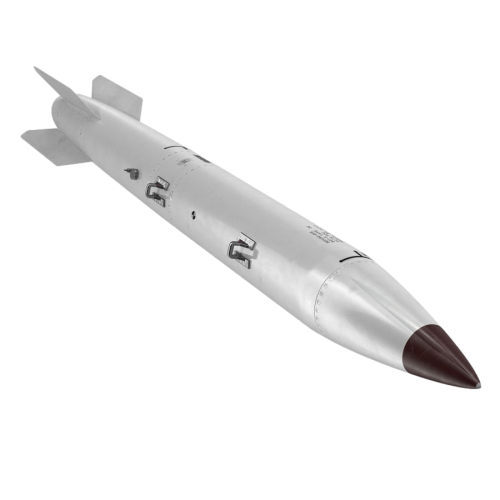
B61 nuclear bombs have been deployed in Europe under US nuclear sharing arrangements for some time. Originally designed as a Cold War weapon in the 1960s, the B61-12 (modification 12) entered production in December 2021 with the aim of extending the lifespan of these nuclear weapons. The latest modification includes ‘steerability’ and ‘dialable yields’, which means that the bombs can be launched some distance from their target (‘standoff capability’ meaning that pilots can reasonably expect not to be impacted by a nuclear blast) and that the explosive power of the bombs can be set as ‘usable’ on the battlefield. The development and deployment of these bombs to Lakenheath (and elsewhere in Europe) represents a significant and dangerous expansion of the US nuclear bootprint and an escalation in tension between nuclear-armed states.

Why accelerate the deployment? Politico quotes from the US diplomatic cable as follows: 

“Given the rising volume and scale of Russia’s nuclear rhetoric, a subset of allies requested continued consultations at NATO to ensure continued readiness and consistent messaging.”

Commenting on Twitter, Hans Kristensen notes:

“One odd part of this story is that training/certification of the European unites wasn’t supposed to begin until turn of the year ... after which the weapons would arrive. Moving up deployment would require moving up training/certification first ... Nor should people think that all the European bases will necessarily receive the B61-12s at the same time. This exchange could happen over many months.”

Given that deployment was already planned and given the need to complete training and certification on the bombs before deployment, accelerating the deployment - or announcing an acceleration, which may be a different thing - seems like a political/strategic move rather than an operational imperative.

The language in the US cable suggests pressure from NATO member states for some sort of gesture. Poland’s political leaders have been signalling eagerness to join NATOs nuclear sharing arrangement. The accelerated deployment may have been announced as a concession. Whatever the reasons the accelerated deployment of B61-12s is unlikely to reduce nuclear tensions in Europe. ­­

Persistently objecting

Tom Unterrainer

From END Info 33 DOWNLOAD

The presence of member and soon-to-be members of the nuclear-armed NATO alliance at the First Meeting of State Parties (1MSP) to the Treaty on the Prohibition of Nuclear Weapons (TPNW) raises a number of questions. First amongst these is: what were they doing there?

One, charitable, interpretation of their attendance is that such states are - in stark contradiction to their ‘voluntary’ military associations - strenuously committed to nuclear abolition. As such, any and all forums designed to discuss and further the aim of nuclear abolition are of great and sincere interest.

Another, less charitable, interpretation is that the presence of NATO and soon-to-be NATO states at such meetings is a cold and calculated legal manoeuvre.

In issues 22 and 23 of END Info the question of ‘persistent objector’ status was raised. In international law, a ‘persistent objector’ is a state or states that consistently and clearly object to a ‘norm’ of law from the time of the emergence of such a ‘norm’. It is understood that such persistent objection can act to prevent a particular law from becoming a ‘customary’ or generally accepted part of international law.

In issue 22 (Feb 2021), we looked at the Chatham House report ‘NATO and the TPNW’ and in a follow-up (issue 23, March 2021) we focussed on ‘persistent objector’ status in particular. The Chatham House report explains:

While it is a general principle of international law that treaties do not create obligations for third states, it is also an accepted principle that a rule set forth in a treaty could, under certain conditions, become binding on a third state as a customary rule ... However, this is not an automatic process. Two distinct concepts are relevant here: the concept of so-called ‘specially affected states’, and that of ‘persistent objectors’ ... As the ICJ has explained, a lack of consent from specially affected states may have the effect of preventing the required general state practice from emerging, preventing the rule from coming into being in the first place. There is a strong argument that states with nuclear weapons and those in a nuclear alliance would be specially affected by a proposed ban on nuclear weapons. Even if a rule is indeed created, states that have objected to a certain degree to its emergence - so-called persistent objectors - will not be bound by it.

In issue 32 (‘TPNW: the beginning of the end for nuclear weapons?’) we speculated that the presence of NATO member states at the 1MSP could represent a ‘crack’ in the ‘persistent objector’ status. What actually happened points in the opposite direction: no cracks emerged. Rather, NATO and NATO-aligned states took the opportunity of their observer status and the speaking rights afforded to them to either challenge the TPNW itself or to promote fallacies around nuclear weapons.

For instance, the statement from Sweden, delivered by Ann-Sofie Nilsson, reads as follows:

Sweden has a longstanding and continuous engagement for nuclear disarmament. Let me reiterate that the Swedish Government’s decision of 2019 to not sign nor ratify the TPNW stands. We note that the Treaty does not include any of the countries that possess nuclear weapons, which we do not see as a realistic or effective way forward...

For decades, Sweden has been a strong advocate and active promoter of disarmament and non-proliferation – these efforts will continue and will remain firmly rooted in the framework of the NPT, the cornerstone of the global disarmament and non-proliferation architecture.

Whilst there is no explicit defence of nuclear weapons or nuclear doctrines as such, there is explicit opposition to the TPNW and a clear affirmation of the NPT. All of this suits the nuclear-armed states which have all failed to comply with the NPT, let alone advance the aim of nuclear disarmament more generally. The suggestion that the TPNW and NPT in some way contradict each other is all-too familiar and, more to the point, wrong.

Norway’s statement is more explicit:

Norway is attending this conference as an observer. This is not a step towards signing nor ratifying the TPNW, which would be incompatible with our NATO obligations. Norway stands fully behind NATO’s nuclear posture.

The Netherlands strikes a similar note:

• The Netherlands remains firmly committed to NATO, including its policy of nuclear deterrence and our nuclear task. And this NATO Membership remains essential for our collective security.

• The Netherlands does not have the intention to sign or accede to the TPNW. It is incompatible with our NATO obligations. However, the fact that we do not accede to the TPNW, or accept the claim that its provisions have a binding effect under customary law, does not mean that we do not appraise the opportunity to observe the discussions here today. Open and frank dialogue are essential for the Netherlands.

• In fact: this is not the first time we have participated in the TPNW discussions. We would like to remind delegations of our participation in the 2017 negotiations leading up to this Treaty, including offering concrete suggestions to make the TPNW a more broadly acceptable and credible disarmament treaty - not only to us but also possibly to other NATO Allies – which were unfortunately rejected.

Here, The Netherland’s not only objects but points out that it has been objecting since 2017! They have been ‘persistently objecting’ to the TPNW from the very start. The first prize for clarity, enveloped in a cloud of dire hypocrisy, is awarded to Germany, which stated in its address to the 1MSP that:

As a member to NATO – and as long as nuclear weapons exist, NATO will remain a nuclear Alliance -, and confronted with an openly aggressive Russia, which has not only invaded Ukraine but is threatening the rules-based international order and peace in Europe, Germany cannot accede to the TPNW, which would collide with our membership in NATO including nuclear deterrence. As non-member to the TPNW we are not bound by its provisions, nor do we accept the claim that its provisions are applicable under customary law – now or in the future.

It is almost as if, like me, the Germany Foreign Office did an internet search of ‘persistent objector’ and crafted their statement to the 1MSP in order to precisely comply with the definition.

It is clear, then, that the NATO and soon-to-be NATO states in attendance at the 1MSP maintained a deliberate and coordinated approach. None of these states is itself nuclear-armed but both The Netherlands and Germany host US nuclear bombs under ‘nuclear sharing’ arrangements. Sweden, in its letter of intent to join NATO, scrapped decades of neutrality and opposition to nuclear weapons for an explicit recognition and acceptance of the fact that NATO is a nuclear alliance.

Where does this leave the TPNW? As events in Vienna demonstrated, the majority of the world stands in opposition to nuclear weapons. The global majority wants such weapons to be abolished. Unsurprisingly, the minority of states with nuclear weapons and the non-nuclear states with which they are aligned have no intention - despite repeated claims otherwise - of ever giving them up: at least, not without a fight.

If the TPNW is to move from a voluntary treaty to a customary rule under international law, then the persistent objectors will have to change their tune. It is at this point that effective political action and the political change that comes with it becomes an essential consideration. Perhaps the first step would be to call-out Germany, Sweden, Norway and The Netherlands for their actions at 1MSP: make it clear that we know just how cynical they are. Those of us in nuclear-armed states who called on our governments to attend 1MSP as observers need to think about what we’re actually asking them to do: can they be trusted to positively engage in genuine discussions towards nuclear abolition or will they simply use the platform to ‘persistently object’? Current evidence suggests the latter rather than the former.

The achievements of those states, NGOs and campaigners who came together to forge the TPNW are immense. The 1MSP was a clear demonstration of majority opinion. The task of securing global nuclear abolition made a giant stride forward with this frontal rejection of nuclear weapons. The ‘persistent objectors’ represent a political roadblock to abolition. Political roadblocks are removed by political means.

Nuclear-Free Trieste?

Alessandro Capuzzo, Italy

From END Info 33 DOWNLOAD

The following text is the second transcript from the peace conference organised by ABFANG, Vienna, June 2022.

Moderation: We discussed about the importance of intertwining the peace and environmental struggles in order to safeguard peace and our planet, since both topics strongly connected to each other. Now we will hear from peace activist Alessandro Capuzzo from the city of Trieste, about how the TPNW can help shape the future of the territory of the Gulf of Trieste – nuclear free.

Alessandro: Hello everyone! I would like to talk to you today about how the TPNW is opening the way for a nuclear weapons free future for my city and the wider territory of Trieste. As citizens of the Gulf of Trieste, we understand that the 1947 Treaty of Peace with Italy defined our territory as demilitarized and neutral. Currently, Italy and Slovenia share the Gulf of Trieste with Croatia; are part of the North Atlantic Alliance and they have expressed themselves against the 1947 Peace Treaty, since they are involved in the Alliance's military nuclear programs.

The Gulf of Trieste hosts, contrary to the 1947 Peace Treaty, two military nuclear transit ports, Trieste in Italy and Koper/Capodistria in Slovenia. The very presence of these two urban centers makes it impossible to seriously prevent accidents, with respect to the nuclear propulsion of ships, the presence on board of weapons of mass destruction, and the possibility of becoming a nuclear target. Moreover, the secrecy imposed "for security reasons" prevents the wide assessment of the risk in relation to the existing dangers; it forces the institutions to omit important bits of information and consequently hides the dangers of the situation to the population and nature.

We, therefore, are here to propose to the TPNW Conference, the launch of case studies on risk, and the lack of transparency in the matter, to be entrusted to the Nuclear Prevention School of the Atomic Agency (IAEA), at the International Center for Theoretical Physics of Miramare in Trieste. Not only for Trieste but for all twelve Italian military nuclear ports (besides Trieste, Venice, Brindisi, Taranto, Augusta, Castellammare di Stabia, Naples, Gaeta, Livorno, La Spezia, La Maddalena and Cagliari) and for the terrestrial nuclear air bases of Aviano and Ghedi.

And we don’t stop there: We call for a resumption of the talks for the denuclearization of the Mediterranean Sea, inspired by the Treaty for the banning of nuclear weapons; which involves our Gulf, as legally bound by the Peace Treaty with Italy after World War II, to Demilitarization and Neutrality.

In 2017 together with the former mayor of Koper/Capodistria (Slovenia) Aurelio Juri, WILPF Italia and Disarmisti Esigenti, we submitted a relevant Working Paper to Conference for the Nuclear Weapons Prohibition Treaty (TPNW), which concluded with the proposal of case studies I mentioned before; today, five years after its approval, the TPNW has entered into force, and we are in Vienna reviewing its contents and implementation. We therefore invite you to revisit our 2017 Working Paper and its proposals. These are now feasible and can be advanced, due to two Treaties mentioned: the Nuclear Ban or TPNW, and the 1947 Peace Treaty with Italy.

Moderation: Coming back to you Alessandro for the second round. What would be the next steps to achieve a nuclear free Gulf of Trieste?

Alessandro: The Nuclear Weapons Ban Treaty, which most UN member countries have set up under pressure from the International Campaign to Abolish Nuclear Weapons (ICAN) of which we feel part, can change the balance of power between nuclear states and those that are not, thanks to the introduction of substantial transparency for the benefit of civil society and the whole of Humanity.

While the implications of the TPNW are known, few are aware of the provisions from the Peace Treaty 1947, implemented by the United Nations Security Council with Resolution S/RES/16, which claimed jurisdiction over the Free Territory of Trieste, and existed as an independent state from 1947 to 1954, on the southern end of the Iron Curtain.

Elements are retained, as confirmed by former Secretary General Ban Ki-Moon, in a 2015 letter to Palestinian President Abbas, listing the Territories under direct UN competence.

The Statute of the former Free Territory of Trieste contained in the Peace Treaty with Italy is a juridical unicum, comparable to the constitutional choice of Army abolition made by Costa Rica; which involves the coastal strip of the Adriatic Gulf where Italy, Slovenia and Croatia join. Disarmament and Neutrality are enshrined in there.

These norms of International Law, “forgotten” for political needs by the most involved States, if associated with the TPNW, allow the achievement of an effective denuclearization in the Gulf of Trieste. We therefore call on the NGOs and the States parties to the TPNW to test together the feasibility of this proposed implementation of the Nuclear Ban.

A particular invitation is addressed to the States registered in the Peace Treaty with Italy, for the right they have to use the International Free Port of Trieste: Austria, Czechia, France, Great Britain, Italy, Poland, Slovakia, United States, Switzerland, Hungary, and all the countries emerged from Yugoslavia and Soviet Union. In addition to the mentioned, Australia, Belgium, Belarus, Brazil, Canada, China, Ethiopia, Greece, India, New Zealand, the Netherlands, Ukraine and South Africa, are also involved in the Peace Treaty with Italy.

Neutrality in the international context

Prof. Heinz Gärtner, Austria

From END Info 33 DOWNLOAD

Introduction

ABFANG (Action Alliance for Peace, Active Neutrality and Non-Violence) is an Austrian peace coalition that advocates and organises for ‘active neurality’. This concept has a particular meaning in a state which has been neutral, unaligned and outside of any military alliances, since 1955. Austria’s neutral status sits alongside its status as a nuclear-weapon-free zone.

There is undoubtedly tremendous political pressure exerted on Austria, a well as Ireland which maintains a similar status of neutrality, to relinquish this status and to join NATO. Such a development would be a catastrophe not only for Austria itself and Europe more generally but for prospects for peace.

ABFANG convened a conference to coincide with the 1st Meeting of States Parties to the Treaty on the Prohibition of Nuclear Weapons (TPNW), which was addressed by an array of activists, experts and participants in the international peace movement. Of special interest was the round-table discussion that included contributions on the importance of Austria’s neutral status, together with analyses of the impact of the TPNW.

END Info has translated one of these contributions and reproduced another with the aim of alerting others to the importance of Austria’s neutrality and in order to encourage a discussion on the legacies of non-aligned states, the role and function of ‘active neutrality’ and the implications of such positions for a very different mode of foreign policy.

We live in a very polarized world, but polarization is not new. We have the polarization already experienced during the Cold War, the East-West conflict. It is important to remember that the neutral states were able to break out during the period of bloc formation to stay out of the military alliances (NATO and Warsaw Pact). Some say that neutrality was part of the Cold War, however the opposite is true. May I recall that in 1955 (when Austrian neutrality was proclaimed), the blocs were already nuclear powers and part of "Mutually Assured Destruction". Austria was at that time already a nuclear weapons-free state, since in our State Treaty the possession or acquisition of nuclear weapons was banned. At that time, for example, neutrals had states like Sweden or Switzerland, as well as Germany and Canada.

After the end of the Cold War, i.e. after 1989, there was another attempt at polarization, namely unipolarity. An American political scientist called it "The Unipolar Moment". George W. Bush tried to create US hegemony: there were wars in Afghanistan and Iraq. It was a bad time for neutral states because a unipolar world was incompatible with neutrality. The unipolarity/hegemony never materialized. We currently live in one polarized world, in a world of great power competition between the USA, China and Russia. Russia is the first country to attempt war in this great power competition to survive. I say the first war because more could follow.

Polarization is always associated with alliance building. We have NATO and we have the successor organization to the Warsaw Pact in parts of Eastern Europe and we have those of the US in alliances founded in Asia (AUKUS; Quad) or the “Abraham Accords” in the Middle East against Iran.

What opportunities do smaller states have in a polarized world? You can join one, join an alliance because there is a promise that it will give protection. The “nuclear umbrella" is a form of promise of protection. Article 5 of the NATO treaty, which contains an obligation to provide assistance, is the other form of protection. You get a promise of protection – you don’t know whether it will be kept not, but of course you are also "captive" and must take part in foreign wars. If Article 5 assistance comes, NATO members are obliged within the framework of "solidarity" to stand with those attacked or to stand by a threatened state.

The second option for small states (there are only two options) is to remain neutral. i.e. to remain outside of great power competition, as Austria did during the Cold War.

Now we often hear that neutrality is incompatible with solidarity, because solidarity is exclusively interpreted as military solidarity, i.e. one seems forced to join an alliance, a nuclear alliance, to show solidarity. We hear, as a logical extension of this, that to show solidarity a neutral state would have to give up neutrality and join a nuclear alliance.

The opposite is the case. Austria must, after the historical experiences of the two world wars, be very careful. Military solidarity can also be false solidarity. The opposite is the case and that is why we are in Vienna today, because neutrality is a necessary condition for the Austrian initiative for the realization of the nuclear weapons ban treaty, i.e. first in 2010 for the humanitarian initiative and then in 2017 for the Prohibition Treaty and now the TPNW State Conference in Vienna. No nuclear-armed state, no state in a nuclear alliance would have been able to take this initiative, a neutral state was necessary. That's why it was and is neutrality that is a prerequisite for building solidarity among non-nuclear weapon states. That's what Austria did, but only because it was neutral. So today Austria is the most important state in the European Union that is neutral and that can build a bridge to the non-aligned countries of the Global South. Most TPNW signatories come from the Global South. In Europe there are very few participating countries because we have NATO. Austria should therefore under no circumstances give up its neutrality.

Austria used to be a good example of a nuclear weapons-free zone, but unfortunately wider such zones were not implemented. After Austria became neutral in 1955 and was therefore free of nuclear weapons, the Polish Foreign Minister Adam Rapacki advocated that the whole of Central Europe, i.e. Germany, Czechoslovakia, Hungary, Poland and Austria, becomes nuclear-weapon-free. But the German Chancellor Konrad Adenauer did not want that, saying neutrality was “a poison of the Soviet Union” and the Soviet Union didn't want it either because they did not want to give up their zone of influence in Eastern Europe . Nevertheless, this idea is very good and we should not let it die.